Navigating the world of Medicare can be complex, with numerous options available to suit diverse healthcare needs. Understanding the differences between Medicare Advantage Plans in New York and Original Medicare is crucial for making informed decisions. Medicare Advantage, also known as Part C, offers an alternative by combining hospital, medical, and often prescription drug coverage. This webpage will explore key differences, helping you evaluate the benefits, costs, and coverage options that align with your healthcare priorities. Use our free Medicare plans finder tool to compare plans available in your area for a more personalized approach to selecting coverage.







Choosing a Medicare Advantage Plan in New York
Key Highlights
- Medicare Advantage (Part C) offers bundled services, including prescription drugs, vision, dental, and more, through private insurers.
- Types of Medicare Advantage plans include HMOs, PPOs, PFFS, SNPs, and MSAs, each catering to different needs.
- Medicare Advantage plans often cover prescription drugs, unlike Original Medicare, which requires separate Part D enrollment.
- Benefits include out-of-pocket maximum caps and additional services like vision, dental, and enhanced coverage over Original Medicare.
- Enrollment periods include the Initial Enrollment Period and Annual Election Period, crucial for successful Medicare Advantage enrollment.
Compare plans and enroll online
Understanding Medicare Advantage Plans
Choosing the right Medicare Advantage plan is crucial for ensuring that your health care needs are met effectively and affordably. These plans offer a consolidated way to receive your Medicare Part A and Part B benefits and often include additional coverage, like prescription drug plans, vision, dental, and hearing. By understanding the various facets of Medicare Advantage, including what these plans entail and the types available, you can make an informed decision that aligns with your health needs and lifestyle.
| Plan Type | Key Features | Considerations |
|---|---|---|
| Health Maintenance Organization (HMO) | Requires a primary care doctor; referrals are needed for specialists | Limited to network providers, except in emergencies |
| Preferred Provider Organization (PPO) | More flexibility, no need for referrals | Higher cost for out-of-network care |
| Private Fee-for-Service (PFFS) | Flexibility to see any provider who accepts the plan | Providers must agree to the plan’s terms and conditions |
| Special Needs Plan (SNP) | Targeted to specific health conditions | Limited to those with specific diseases or characteristics |
| Medicare Savings Account (MSA) | High deductible plans with savings account | Patients manage funds and costs |
This table highlights the various Medicare Advantage plan types and their key attributes, aiding in informed decision-making.
What Are Medicare Advantage Plans?
Medicare Advantage plans, also known as Medicare Part C, are an alternative to Original Medicare provided by private insurance companies approved by Medicare. These plans must offer at least the same level of coverage as Medicare Part A and Part B, but often include extra benefits that are not covered under Original Medicare, such as prescription drug benefits, which are typically included under Medicare Part D, as well as vision and dental coverage. One of the primary appeals of Medicare Advantage plans is the bundled services that often lead to more consolidated coverage and sometimes lower out-of-pocket costs for enrollees.
Medicare Advantage plans also offer yearly limits on out-of-pocket spending, which can be a significant advantage in managing potential health care costs. Original Medicare does not have an out-of-pocket maximum, meaning that enrollees might face high costs for extensive care. With a Medicare Advantage plan, once your out-of-pocket costs hit a certain limit, the plan covers all additional costs for the rest of the year. This safety net is a critical feature for many, especially if you’re anticipating multiple healthcare needs.
It is essential to note that, unlike Original Medicare, many Medicare Advantage plans require enrollees to use a network of doctors and hospitals. This can limit your choices but may also present the opportunity for integrated care, which can lead to better health outcomes. Always check if your preferred doctors and hospitals are in-network when considering a Medicare Advantage plan. Using MedicarePartCPlans.org’s free plan finder tool can help streamline this process by comparing different plans in your area based on your unique needs and coverage preferences.

Types of Medicare Advantage Plans Available
When it comes to Medicare Advantage, there are several types of plans to choose from, each suiting different needs and preferences. The most common types are Health Maintenance Organizations (HMOs), Preferred Provider Organizations (PPOs), Private Fee-for-Service (PFFS) plans, Special Needs Plans (SNPs), and Medical Savings Account (MSA) plans. Understanding each type helps in selecting a plan that aligns with your healthcare preferences and needs.
HMOs are typically more restrictive as they require members to select healthcare services within their network, except in emergencies. They usually need referrals from primary care doctors to see specialists. On the other hand, PPOs offer more flexibility. You can see any doctor, but using network providers will cost less. You don’t typically need a referral to see a specialist. PPOs are ideal for those who travel or require specialist care frequently.
PFFS plans determine how much they’ll pay providers and how much you’ll pay for care upon meeting Medicare’s standards. You may have the flexibility of seeing any healthcare provider, but acceptance of the plan by the provider is critical, as not all may agree to its terms. SNPs cater to people with specific conditions or characteristics. They cover all Medicare Part A and Part B services, and, for most beneficiaries, services under prescription drug plans are included. These plans are excellent for those who require personalized care management due to chronic conditions, limited income, or living in institutions.
Lastly, MSAs combine a high deductible health plan and a bank account to cover healthcare costs. The plan deposits a sum of money into your account, which can be used to pay for healthcare. You’ll pay out-of-pocket until you meet the deductible, at which point the plan covers additional costs. Choosing the right type of Medicare Advantage plan involves considering your healthcare needs, whether you need access to specific networks, and whether any special services apply to you. Comparing these options using MedicarePartCPlans.org can simplify decision-making by providing detailed insights into the benefits and costs of various plans in your location.
To enhance your understanding of the different Medicare Advantage plans, consider the following practical tips when choosing a plan:
- Assess your healthcare needs, including specialist requirements and expected travel frequency.
- Evaluate the importance of network flexibility versus potential out-of-pocket costs.
- Consider experiences or feedback from individuals with similar health conditions.
- Analyze if you qualify for Special Needs Plans based on specific health conditions or circumstances.
- Review how each plan integrates prescription drug coverage, if needed.
- Explore available resources to compare plan benefits and potential costs in your area.
- Investigate the provider acceptance for Private Fee-for-Service plans.
By examining these factors, you can identify a Medicare Advantage plan tailored to your situation.
Comparing Medicare Advantage and Traditional Medicare
When looking at Medicare options, understanding the differences between Medicare Advantage and Traditional Medicare is crucial. Both offer fundamental health care benefits, but they differ in structure, coverage, and additional benefits. Medicare Advantage plans, known as Medicare Part C, are provided by private insurers and often include extra services like prescription drugs, unlike Original Medicare. Identifying these disparities can guide your choice in selecting a plan that best suits your healthcare needs and lifestyle. Let’s delve into the specific benefits that set Medicare Advantage apart and explore how drug coverage compares between these options.
Benefits of Medicare Advantage Over Traditional Medicare
Medicare Advantage plans boast several distinct benefits over Traditional Medicare, catering to diverse health and financial needs. One significant advantage is the inclusion of additional services beyond the standard Medicare Part A and Part B coverage. While Original Medicare requires separate enrollment in Medicare Part D for drug benefits, many Medicare Advantage plans conveniently integrate prescription drug coverage within a single plan. This bundling simplifies management and often results in cost savings for enrollees by potentially reducing their out-of-pocket expenses. Additionally, Medicare Advantage plans can also offer coverage for vision, dental, and hearing services, which are not covered under Original Medicare. This comprehensive nature supports individuals with varied healthcare needs and routine medical requirements, ensuring their coverage is both holistic and efficient.
Moreover, Medicare Advantage offers a financial safeguard through a yearly cap on out-of-pocket expenditures. This feature ensures that once beneficiaries reach a set spending limit, they won’t incur additional costs for covered services for the year. In contrast, Original Medicare doesn’t cap out-of-pocket expenses, posing a risk of considerable financial burden if extensive healthcare is needed. This makes Medicare Advantage particularly attractive to those anticipating significant healthcare use, allowing them to budget with certainty and peace of mind. Furthermore, Medicare Advantage plans often emphasize preventive care and wellness programs, fostering proactive health management that can lead to improved health outcomes over time.
However, it’s essential to acknowledge the trade-off with network restrictions often associated with Medicare Advantage plans. These plans typically require enrollees to use a network of healthcare providers, which could limit provider choices compared to Original Medicare’s flexibility in selecting any provider who accepts Medicare. Despite this, the structured coordination within Medicare Advantage networks can benefit enrollees through more integrated care delivery, potentially enhancing the overall quality and efficiency of their healthcare experience. A thoughtful comparison using resources like MedicarePartCPlans.org can help weigh these pros and cons, providing a clearer understanding of each option to help select the plan that aligns well with personal needs and preferences.
Key Differences in Drug Coverage
Discrepancies in drug coverage constitute a pivotal consideration for Medicare beneficiaries, especially when choosing between Medicare Advantage and Traditional Medicare. Original Medicare does not include prescription drug coverage, necessitating a separate enrollment in Medicare Part D plans to cover medication costs. Medicare Advantage plans, conversely, often incorporate a Medicare Part D component, offering prescription drug benefits as part of their overall package. This integration is one of the defining appeals of Medicare Advantage, simplifying the administration of healthcare benefits while potentially reducing overall costs.
The structure of drug coverage in Medicare Advantage plans can vary significantly depending on the plan’s specifics, leading to diverse formulary lists and cost-sharing requirements. Beneficiaries should closely evaluate each plan’s formulary, the list of covered prescription drugs, to ensure their medications are included. This means considering plans whose cost-sharing structures align with their budget and medication needs is crucial. Additionally, Medicare Advantage plans may offer additional savings through special initiatives or discount programs tailored for specific medications or conditions, further differentiating their offerings from standalone Part D plans associated with Original Medicare.
An essential factor to consider is how drug coverage is affected by the Medicare Advantage network restrictions. While these plans might offer competitive drug benefits, the limited provider network might also influence access to certain pharmacists or specialized drug services. For beneficiaries who require consistent access to specific medications from particular pharmacies, confirming that these are accessible within the plan’s network is vital. Using the comparison tool at MedicarePartCPlans.org can assist in thoroughly reviewing drug coverage options, weighing the pros and cons of convenience, cost, and access. Ultimately, selecting between Medicare Advantage and Traditional Medicare with Part D depends on balancing one’s healthcare priorities, medication needs, and financial considerations to achieve optimal coverage.
Find & Compare Plans Online
Choosing the Best Medicare Advantage Plan for Your Needs
Selecting a Medicare Advantage plan that aligns with your lifestyle and health needs is essential for efficient and comprehensive healthcare. Medicare Advantage plans, also known as Part C, combine Medicare Part A and Part B, often adding benefits like vision, dental, and prescription drug coverage. As you explore your options, consider not only the types of available plans like HMOs and PPOs but also how regional factors may influence your decision. Whether traveling abroad frequently or preferring local healthcare providers, knowing your personal preferences and needs lays the foundation for an informed choice.
How to Find the Right Plan in Your Area
Finding the right Medicare Advantage plan in your area involves a thorough understanding of the plans available and how they fit with your healthcare needs. Location plays a critical role in determining the types of plans and the extent of coverage available to you. To start, using resources such as MedicarePartCPlans.org can simplify your search by enabling you to compare various advantage plans based on your zip code. This tool allows you to filter plans by specific preferences, such as included benefits and provider networks, ensuring you’re reviewing options that actually meet your needs.
When considering a plan, one of the key factors to consider is the provider network. Plans such as HMOs often require you to choose a primary care physician and use in-network providers to minimize costs. In contrast, PPOs offer more flexibility by allowing visits to both network and out-of-network providers, though out-of-network services typically incur higher costs. Additionally, it’s essential to evaluate the plan’s formulary with an eye toward prescription drug benefits to ensure your medications are covered under the plan you’re considering.
Cost considerations don’t stop with premiums; you should also investigate other expenses like deductibles, co-pays, and the out-of-pocket maximum, which provides a financial cap on your spending for covered services each year. Researching these details within Advantage plans is crucial to avoid unexpected financial burdens that can arise during the policy term. Educational resources available on MedicarePartCPlans.org, alongside consultations with local insurance experts, can offer insight into cost-saving measures without compromising on the quality of coverage.
Lastly, testimonials and reviews can provide an added layer of perspective. Insights from other beneficiaries about the responsiveness of customer service, ease of claims processing, and overall satisfaction with their plans can lend a practical viewpoint beyond the facts and figures of a policy brochure. Remember, the optimal strategy in selecting a Medicare Advantage plan is not just finding the one with the lowest premium but ensuring it fits well with your healthcare requirements and financial situation.
Considerations for Foreign Travel and Coverage
If you’re someone who frequently travels abroad, it’s vital to understand how your Medicare Advantage plan will address foreign travel and coverage needs. Medicare generally doesn’t cover healthcare services outside the United States, but many Medicare Advantage plans offer additional benefits that cater to international travel. Some plans may provide limited emergency and urgent coverage outside the U.S, giving you peace of mind when you’re on the move. Analyze these aspects closely when choosing a plan, as the extent of international coverage can vary greatly from one plan to another.
It’s crucial to review the specific details of international coverage in the plans you’re considering. For example, some advantage plans include travel insurance for emergencies, while others may offer more comprehensive global coverage schemes. Knowing whether prescription drugs, sudden illnesses, and accidents are covered internationally can significantly influence your decision if travel is a key component of your lifestyle. Additionally, if you’re planning to travel for extended periods, certain plans might allow you to suspend coverage temporarily without penalties, ensuring you’re not double-paying for healthcare coverage you can’t use domestically.
Accessibility of services while abroad is another aspect to weigh. Plans with robust international networks can facilitate finding medical assistance promptly, reducing the stress of navigating foreign healthcare systems. If returning to the U.S. results in a need for follow-up care, ensure the plan’s provisions cover this scenario under their typical in-network rules.
Lastly, if the plan you’re reviewing lacks sufficient international coverage, consider supplemental plans or travel insurance options that fill these gaps. Balancing Medicare Advantage’s domestic benefits with any additional international needs requires a comprehensive approach to avoid unexpected dilemmas abroad. Utilizing the plan comparison tools at MedicarePartCPlans.org can help you filter only those plans offering the breadth of global coverage you require. Armed with the right information, you’ll embark on your international adventures knowing you’ve prepared comprehensively for any health-related occurrences.
Enrolling in Medicare Advantage: What You Need to Know
Choosing to enroll in a Medicare Advantage plan involves understanding key components such as eligibility requirements and enrollment periods. How these plans work in conjunction with your current healthcare and provider preferences is equally essential. As we explore these facets, you’ll gain insights into enrolling in Medicare Advantage, understanding the pivotal role of enrollment timelines, and how your relationship with healthcare providers may influence your plan choice.
Enrollment Periods and Eligibility Requirements
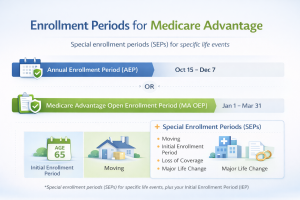
Successfully enrolling in a Medicare Advantage plan hinges on your understanding of the specific enrollment periods and eligibility requirements. You have several opportunities throughout the year, a key period being your Initial Enrollment Period (IEP), which is your first chance to join Medicare Advantage. It’s crucial to note that the IEP starts three months before you turn 65, includes your birthday month, and continues for three months after, giving you a seven-month window to enroll. If you’re eligible for Medicare due to a disability, your IEP follows a similar structure surrounding your 25th month of receiving benefits.
If you’ve missed this period, not to worry. The Annual Election Period (AEP), from October 15 to December 7 each year, is another prime time to sign up for Medicare Advantage plans. During AEP, beneficiaries can switch from Original Medicare to a Medicare Advantage plan, switch between Medicare Advantage plans, or switch back to Original Medicare. The effective start date for changes made during AEP is January 1 of the following year, ensuring coverage continuity.
Eligibility requirements for Medicare Advantage plans are straightforward: You need to be enrolled in Medicare Parts A and B, reside in the plan’s service area, and not have End-Stage Renal Disease (ESRD) at the time of enrollment. However, those with ESRD may have options through certain Special Needs Plans (SNPs) designed to offer the care they need. Be aware that periodic changes in Medicare policies may affect these provisions, so staying informed through Medicare.gov and insurance resources like MedicarePartCPlans.org is beneficial.
Understanding enrollment periods and ensuring you’re eligible allows you to make informed decisions about joining a Medicare Advantage plan. The choice to sign up at the right time can impact your health care expenditures and coverage comprehensiveness significantly. Utilize the tools available at MedicarePartCPlans.org to compare your options and ensure you’re selecting an advantage plan that aligns with your health and financial needs. These aspects are vital, especially for those managing chronic conditions or anticipating healthcare use that extends beyond basic coverage needs.
How Important Is Your Doctor in the Choice?
When determining the right Medicare Advantage plan, the relationship with your doctor should be a substantial consideration. Many Medicare Advantage plans operate within network rules, meaning they have specific lists of doctors and healthcare providers you must use to access the full suite of plan benefits. This can affect your out-of-pocket costs, as out-of-network services are generally more expensive or not covered. For those who have longstanding healthcare relationships, ensuring your doctor’s inclusion in a plan’s provider network is crucial to maintaining continuity in care.
The importance of verifying that your healthcare providers are in-network cannot be overstated. This step not only preserves familiar doctor-patient relationships, which are key to effective healthcare management, but it may also save you from unexpected costs. A trusted provider who knows your medical history can offer more personalized care, especially when managing chronic conditions like diabetes or heart disease. This integration often results in more accurate and efficient healthcare service, keeping you healthier and potentially reducing the need for more costly interventions.
Additionally, the choice of specialists and healthcare facilities is another factor. Medicare Advantage plans often require referrals from primary care physicians to see specialists, meaning your hospital preferences and specialty care options are tied to these considerations. For instance, Health Maintenance Organization (HMO) plans typically demand that you receive all but emergency care through network providers. In contrast, Preferred Provider Organization (PPO) plans offer greater flexibility but at varying cost tiers depending on network use.
Before enrolling in a new plan, use resources like MedicarePartCPlans.org to check your doctor’s network status, compare plan options, and verify coverage details. The website’s plan finder tool allows you to tailor your search based on favored doctors and current health needs. This step is particularly useful for those planning or requiring changes in healthcare services, ensuring that the choice aligns well with both existing healthcare relationships and anticipated provider needs, offering peace of mind and maintaining critical consistency in your care approach.
In conclusion, selecting a Medicare Advantage plan involves thorough research and consideration of your healthcare needs compared to Original Medicare. By understanding the differences in coverage options, costs, and benefits, you can make an informed decision that aligns with your personal health requirements and financial situation. Utilize reliable resources like our Medicare plans finder tool to explore and compare available plans in your area. Remember, choosing the right plan means considering current and future needs to ensure comprehensive healthcare coverage that suits your lifestyle.
Compare plans and enroll online
Frequently Asked Questions
What is Medicare Advantage, also known as Medicare Part C?
Medicare Advantage, or Part C, is an alternative to Original Medicare offered by private insurers. It combines Medicare Part A and Part B benefits and often includes additional coverage such as prescription drugs, vision, and dental care.
How does Medicare Advantage differ from Original Medicare in terms of coverage?
Medicare Advantage plans typically offer more comprehensive coverage than Original Medicare. They include additional services like prescription drug plans and vision and dental coverage, often with lower out-of-pocket costs due to bundled services and a yearly cap on out-of-pocket spending.
What types of Medicare Advantage plans are available?
Medicare Advantage plans come in several types: HMOs, PPOs, PFFS, SNPs, and MSAs. Each caters to different healthcare needs, offering varying degrees of flexibility, network restrictions, and service coverage.
What are the enrollment periods for Medicare Advantage?
The Initial Enrollment Period (IEP) for Medicare Advantage starts three months before the month you turn 65, includes your birthday month, and continues for three months after. The Annual Election Period (AEP) is from October 15 to December 7 each year, allowing beneficiaries to join or switch plans.
How can I find a Medicare Advantage plan that suits my needs?
To find a suitable Medicare Advantage plan, consider your healthcare needs, preferred providers, and financial situation. Using tools like MedicarePartCPlans.org can help you compare plans available in your area based on your zip code, desired benefits, and provider networks.
Have Questions?
Speak with a licensed insurance agent
1-877-436-2343
TTY users 711
Mon-Fri: 8am-9pm ET
Find & Compare Plans Online
ZRN Health & Financial Services, LLC, a Texas limited liability company