Understanding Medicare Part B can be complex, especially when trying to avoid unexpected penalties that can impact your healthcare planning and finances. This guide provides clear, essential information to help you navigate the enrollment process and sidestep potential pitfalls associated with late enrollment penalties. Whether you are new to Medicare or reassessing your current coverage, learning the rules and timing for enrolling in Medicare Part B is crucial for ensuring your healthcare needs are met without unexpected costs.







How to Avoid Medicare Part B Penalties
Key Highlights
- Medicare Part B penalties increase premiums by 10% for each year of late enrollment without coverage.
- Initial Enrollment Period offers a seven-month window to avoid premium penalties.
- Special Enrollment Periods are available for those with employer or retiree coverage.
- General Enrollment from January to March requires careful consideration to avoid penalties.
- Timely Medicare enrollment prevents penalties and ensures essential health coverage.
Compare plans and enroll online
Understanding the Medicare Part B Late Enrollment Penalty
Understanding the Medicare Part B late enrollment penalty is crucial for those eligible for Medicare. This penalty can significantly impact your monthly premium, leading to higher costs over time. Avoiding it requires knowledge about what triggers the penalty and how it’s calculated. By learning about the factors that lead to this penalty, you can better plan your enrollment in Medicare Part B, helping to avoid unforeseen expenses. Our comprehensive guide will delve into these aspects, offering you clarity and insights on how to navigate the complexities and avoid penalties while managing your Medicare coverage.
What Triggers the Penalty?
The Medicare Part B enrollment penalty is primarily triggered by delaying enrollment past your initial eligibility period. Generally, you’re eligible at age 65, and enrollment should commence during your initial enrollment period, which starts three months before and ends three months after the month of your 65th birthday.
If you don’t sign up during this window and don’t have active retiree coverage or are not working with an employer that provides a group health plan, you may face a late enrollment penalty. The penalty exists to encourage timely enrollment and maintain continuous coverage, reducing gaps that could leave you uninsured.
Exceptions exist for those who continue working beyond 65, allowing them to delay enrollment without penalty if they’re covered under an employer’s plan. Planning for this transition is crucial, especially if you’re considering retirement or changing your current coverage. Understanding these triggers and planning accordingly can ensure you avoid higher premiums and potential lapses in coverage when transitioning to Medicare Part B.
Calculating the Costs of the Late Enrollment Penalty
The costs associated with the Medicare Part B late enrollment penalty can add up significantly over time. This penalty is calculated based on your monthly premium and is a lifelong addition to your Medicare costs. Specifically, there’s a 10% penalty for each 12-month period you were eligible but did not enroll.
For instance, if you delay signing up for five years without creditable coverage, your premium could increase by 50%. This higher premium is permanent, meaning you will continue to pay more throughout your time on Medicare. Adequately understanding this calculation underscores the importance of timely enrollment.
It’s crucial to strategize your Medicare commencement to align with your employment status and any existing retiree coverage. If you’re nearing Medicare age, start evaluating your health coverage needs and understand your plan options to ensure seamless coverage. By planning ahead and utilizing resources like our free Medicare plans finder tool, you can avoid costly errors, maintain crucial health coverage, and ensure your health and financial future are secure.
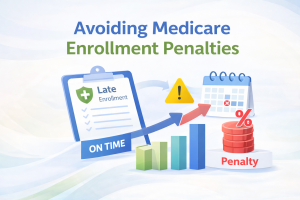
Key Medicare Enrollment Periods You Should Know
Understanding Medicare enrollment periods is essential to avoid costly penalties and ensure seamless coverage. There are several critical times during which you can sign up for Medicare, each with specific rules and implications. Knowing when to enroll can help you avoid the Medicare Part B late enrollment penalty and minimize long-term costs.
The Initial Enrollment Period and its special extensions play significant roles here. Additionally, knowing the General Enrollment period can guide you if you missed other opportunities. These periods ensure beneficiaries make informed decisions on joining Medicare at the right time.
Initial Enrollment and Special Situations
The Initial Enrollment Period (IEP) is a pivotal time to sign up for Medicare without incurring penalties. This seven-month window spans three months before your 65th birthday month, includes your birthday month, and extends three months after. Enrolling during this phase ensures that you avoid the Part B late enrollment penalty, which can permanently increase your premiums.
However, there are circumstances known as Special Enrollment Periods (SEPs) that allow for enrollment beyond this initial window without a penalty. SEPs apply when individuals delay Medicare Part B due to active employment past age 65. If you or your spouse continue working and have employer retiree coverage, you might qualify for a SEP.
This period allows you to sign up for Part B without facing late penalties once employment ends or retiree coverage stops. It’s crucial to plan effectively to smooth this transition. Understanding how these enrollment windows work will help you avoid long-term penalties and enjoy seamless healthcare coverage. For detailed information specific to your situation, making use of tools like the free Medicare plans finder can tailor outcomes to your needs.
| Enrollment Period | Timing | Key Features | Potential Penalties |
|---|---|---|---|
| Initial Enrollment Period (IEP) | 7 months around your 65th birthday (3 months before, the month of, and 3 months after) | Opportunity to enroll in Medicare Part A and B; Initial eligibility for those turning 65 | Late enrollment in Part B may incur a lifetime penalty, increasing monthly premium by 10% for each year delayed |
| General Enrollment Period (GEP) | January 1 – March 31 each year | For those who did not enroll during their IEP; Coverage begins July 1 | Part B late enrollment penalty applies; Potential gap in coverage |
| Open Enrollment Period (OEP) | October 15 – December 7 annually | Allows changes to Medicare Advantage and Medicare Part D plans; Enrollment in or changes to existing plans | No penalties, but potential gaps if Part B was not enrolled initially |
| Special Enrollment Period (SEP) | Varies based on individual circumstances (e.g., loss of employer coverage) | Enrollment is possible due to specific life events without penalty | No penalties if criteria for SEP are met; Must provide evidence of qualifying event |
This table provides a succinct overview to help individuals make informed decisions about Medicare enrollment. Being aware of the timing and conditions associated with each period is crucial in avoiding unnecessary penalties and ensuring appropriate healthcare coverage.
General Enrollment and Its Implications
The General Enrollment Period (GEP) is available for those who missed both their Initial Enrollment Period and any applicable Special Enrollment Periods. Taking place annually from January 1st to March 31st, the GEP offers another chance to sign up for Medicare Part B. However, enrolling during the General Enrollment Period may result in late enrollment penalties, which can significantly impact your premiums. Each 12-month period you delay enrollment can increase your premium by 10%, and these additional costs are lifetime charges.
For example, if you delay by three years without having creditable coverage, you’re looking at a 30% increase in your Medicare Part B premiums. While GEP provides a fallback opportunity, it’s essential to explore all available options beforehand, including retiree coverage or an employer group health plan.
Carefully evaluating plans and understanding the broader implications of these decisions is crucial. Our previous section highlighted how penalties accrue, making early and informed enrollment during these periods beneficial. By planning your Medicare strategy around these enrollment deadlines, you can manage and even sidestep additional part B penalties effectively.
To further assist in understanding the General Enrollment Period better, here are additional key considerations to keep in mind:
- Assess if you qualify for any Special Enrollment Periods to avoid potential penalties.
- Calculate potential premium increases due to delayed Part B enrollment well in advance.
- Investigate alternative coverage options, such as employer or retiree health plans.
- Compare benefits and costs across different Medicare plans to identify your most suitable choice.
- Stay informed about policy changes that might affect your enrollment decisions.
- Consult with a Medicare specialist to clarify doubts and optimize your enrollment strategy.
By considering these factors, you can better navigate the GEP and minimize any financial impact.
Find & Compare Plans Online
The Importance of Timely Medicare Enrollment
Enrolling in Medicare on time is crucial to avoid penalties and ensure you have the necessary health coverage. The Medicare Part B late enrollment penalty can lead to higher premiums, affecting your financial planning during retirement.
Understanding the enrollment periods and strategically aligning them with your age, employment status, and current retiree coverage can help you avoid these pitfalls. For those like retirees or individuals continuing to work past age 65, knowing when and how to enroll is essential. By educating yourself about Medicare’s requirements, you can effectively manage your health care costs and preserve financial stability.
Consequences of Paying Late for Medicare
Paying late for Medicare can have significant financial repercussions. When you miss enrolling during your Initial Enrollment Period, and don’t have retiree coverage or an employer’s group health plan, you may face the late enrollment penalty. This penalty adds a 10% increase to your premium for each 12-month period you were eligible but did not enroll in Part B.
These penalties are lifelong, making a case for timely enrollment even stronger. For instance, if you delay enrollment for four years, your Medicare Part B premium could be 40% higher than those who enrolled on time. Higher premiums aren’t the only concern; there’s also the risk of not having adequate coverage during the gap period. If you’re unaware of these penalties, they can strain your budget considerably. To avoid them, you need to plan your Medicare enrollment meticulously.
Strategies include assessing your retiree coverage, understanding your employers health plan, and knowing exactly when to enroll in Medicare. By using tools like our free Medicare plans finder, you can evaluate options tailored to your financial and health needs, ensuring you never have to face these unnecessary costs. Educating yourself on these matters is crucial; it not only helps you avoid costly penalties but also ensures continuous coverage essential for your healthcare security post-retirement.
How to Enroll in Medicare Without a Penalty
Avoiding a Medicare Part B penalty is possible with timely enrollment and understanding the enrollment periods. Learning how to enroll in Medicare without a penalty helps you save money on your monthly premium and avoid unnecessary financial strain. It’s crucial to familiarize yourself with the Initial Enrollment Period and Special Enrollment Periods that offer flexibility based on your employment status or retiree coverage. Taking proactive steps can ensure you have the right Medicare coverage in place at the right time, protecting your health and financial well-being as you transition into this vital phase of healthcare coverage.

Steps to Sign Up During Your Initial Enrollment
Signing up during your Initial Enrollment Period is the most straightforward way to enroll in Medicare without a penalty. The Initial Enrollment Period gives you a seven-month window to sign up. This period begins three months before the month you turn age 65, includes your 65th birthday month, and ends three months after.
Acting within this timeframe prevents you from incurring the Medicare Part B late enrollment penalty, ensuring affordable healthcare coverage. During this period, it’s essential to evaluate your healthcare needs and look into Medicare Advantage (Part C) plans, Medigap, or Original Medicare to determine the best fit for your situation. Avoid potential penalties by marking your calendar with important dates related to your initial eligibility. If you’re still working and covered under an employer plan or your spouse’s retiree coverage, inquire about a Special Enrollment Period, which can offer further flexibility.
It’s crucial to understand that failing to enroll on time can lead to a 10% penalty on your premium for each year you delay. Utilize resources like the free Medicare plans finder to research and compare options specific to your location, making informed decisions that align with your health needs and financial plans.
Understanding and avoiding Medicare Part B penalties is an essential aspect of managing your healthcare costs effectively. By keeping track of your Initial Enrollment Period, verifying your existing health coverage, and continuously monitoring your enrollment requirements, you can make informed decisions that suit your individual health and financial needs.
Our team at MedicarePartCPlans.org is dedicated to helping you explore your options and find a suitable Medicare Advantage plan. Take advantage of our resources, including the free Medicare plans finder tool, to stay informed and ensure your healthcare coverage aligns with your lifestyle needs.
Compare plans and enroll online
Frequently Asked Questions
What happens if I enroll late in Medicare Part B?
If you enroll late in Medicare Part B, you may face a late enrollment penalty. This penalty increases your premium by 10% for each year you were eligible but did not enroll.
When is the Initial Enrollment Period for Medicare Part B?
The Initial Enrollment Period is a seven-month window starting three months before the month you turn 65, including your birthday month, and ending three months after.
Are there any exceptions to the Medicare Part B late enrollment penalty?
Yes, exceptions exist for individuals with active employment and employer coverage at age 65. They may qualify for a Special Enrollment Period (SEP), allowing enrollment without penalty once employer coverage ends.
How is the Part B late enrollment penalty calculated?
The penalty is calculated as a 10% increase in your premium for every 12-month period you were eligible but did not enroll. For instance, a 50% increase occurs if you delay for five years without creditable coverage.
What is the General Enrollment Period for Medicare Part B?
The General Enrollment Period occurs annually from January 1st to March 31st. Enrolling during this time may result in late enrollment penalties, increasing your premiums.
Have Questions?
Speak with a licensed insurance agent
1-877-436-2343
TTY users 711
Mon-Fri: 8am-9pm ET
Find & Compare Plans Online
ZRN Health & Financial Services, LLC, a Texas limited liability company