California Medicare Advantage Plans Cost 2027

Understanding the costs associated with 2027 California Medicare Advantage plans is essential for beneficiaries seeking comprehensive healthcare coverage. As healthcare needs and budgets vary, exploring the diverse options available can help align your coverage requirements with affordable plans. By comparing California Medicare Advantage plan types, benefits, and network restrictions, individuals can make informed decisions tailored to their personal and financial healthcare needs.

Our guide provides detailed insights into premiums, out-of-pocket maximums, and additional costs, equipping you with the knowledge to navigate the complexities of Medicare Advantage plans in California effectively.

Key Highlights

  • Medicare Advantage plans in California offer varied types, influenced by geographic location.
  • Medicare Advantage plans may include additional services like dental, vision, and wellness programs.
  • Understanding premiums, deductibles, and out-of-pocket limits helps manage healthcare expenses.
  • Enrollment periods include key dates like October 15th to December 7th for plan changes.
  • The free Medicare plans finder tool aids in comparing local plan options effectively.

Compare plans and enroll online

Understanding Medicare Advantage Plans

Navigating Medicare Advantage plans can feel a bit overwhelming, but with clear information, beneficiaries can make informed choices. Offering an alternative to Original Medicare, these plans provide additional healthcare services through Medicare-approved private insurance companies. They bundle Medicare Part A (hospital insurance) and Medicare Part B (medical insurance), sometimes including Part D for prescription drugs.

This section will help you understand what these plans entail and explore the benefits they offer, empowering you to decide if a switch suits your healthcare needs. Let’s delve into their structure and the advantages they could bring to your healthcare journey.

What Are Medicare Advantage Plans

What Are Medicare Advantage Plans?

Medicare Advantage plans, sometimes technically termed Medicare Part C, offer a comprehensive way to receive your Medicare benefits. Managed by private insurance companies, these plans must cover everything Original Medicare does, albeit with some differences in how benefits are delivered.

Many plans include additional services not covered by Original Medicare, such as vision, hearing, dental, and wellness programs. They provide coverage through various plan types, most notably Health Maintenance Organization (HMO) or Preferred Provider Organization (PPO) options, which often focus on network-provided services to manage costs efficiently.

HMOs typically require choosing a primary care physician and obtaining referrals for specialists, focusing on coordinated care that can lead to lower costs. Conversely, PPOs offer more flexibility in choosing healthcare providers and don’t usually require a specialist referral, though staying in-network saves money. Advantage plans are attractive because they consolidate services and can simplify healthcare management for you, the beneficiary.

The integration of Medicare Part D into these plans allows coverage for prescription drugs, potentially reducing your out-of-pocket expenses at the pharmacy. Since Medicare Advantage plans are required to follow federal rules, they set an annual limit on your out-of-pocket costs for covered services. Once you hit this threshold, the plan pays 100% of approved services for the rest of the year, which provides financial predictability in healthcare planning.

Choosing an Advantage plan means aligning with specific networks, which could be a decisive factor based on your preferred providers. It’s essential to consider plan benefits and costs carefully, including premiums, deductibles, and copayments, comparing them with your healthcare needs.

If you’re considering switching to an Advantage plan, evaluating these factors ensures you select a plan fitting your lifestyle and budget. Resources, tools, and services are available to compare plans by location, especially vital in a diverse state like California, where Medicare Advantage plan options can vary significantly.

Benefits of Switching to a Medicare Advantage Plan

Switching to a Medicare Advantage plan can unlock a host of benefits that enhance your healthcare experience. One significant advantage is the often all-encompassing nature of these plans, which frequently include additional services beyond what Original Medicare offers. Routine dental, vision, and hearing care are some examples of these added benefits, addressing healthcare needs that Original Medicare may overlook, thus reducing out-of-pocket expenses.

Another appealing aspect of Medicare Advantage plans is cost management. These plans typically offer predictable copayments and have specific out-of-pocket maximums, unlike Original Medicare, which can lead to surprising costs.

This structure allows beneficiaries to budget more effectively, particularly when managing chronic conditions. Many Medicare Advantage plans also include built-in prescription drug coverage, eliminating the need for separate Part D plans. This consolidation can simplify your healthcare management, streamlining coverage under a singular plan.

The emphasis on preventative services within Medicare Advantage plans also promotes better health outcomes. Many plans offer wellness programs, gym memberships, or other incentives for maintaining a healthy lifestyle. Such proactive measures can mitigate medical issues over time, encouraging an active and healthy aging process.

Moreover, Medicare Advantage plans provide a level of personal care coordination that can be lacking in Original Medicare. Beneficiaries often have a network of healthcare providers who work together, ensuring comprehensive and coordinated care, reducing the likelihood of conflicting treatments or unnecessary tests.

Especially for beneficiaries residing in California, where healthcare diversity is vast, Medicare Advantage plans can cater to specific regional needs, offering tailored insurance services to better match locality-specific health requirements. Thanks to varied resources and tools, comparing plans by location is easier, providing clarity and confidence when making a decision to switch.

As you consider this change, it’s important to weigh all aspects, including costs, coverage options, and your personal healthcare priorities. Using available tools like our free Medicare plans finder at MedicarePartCPlans.org can simplify this process, guiding you to make a well-informed choice.

Comparing Medicare Advantage Plans in California

Exploring Medicare Advantage plans in California involves understanding the differences in coverage and availability that vary across the state. Given the diversity of options available, it becomes crucial to compare these plans based on your specific health needs and preferences. Factors such as plan types and locations significantly impact your choice, and understanding these aspects can lead to informed decisions.

By evaluating how geographical factors and services influence plan selection, you can better manage your healthcare costs and become acquainted with the resources available to help you navigate your healthcare journey in California.

Plan Availability and Coverage Differences

In California, Medicare Advantage plans are widely available, offering varied types and levels of coverage to suit diverse healthcare needs. Availability often hinges on geographic location within the state, which can influence the kinds of plans accessible to you. For instance, urban areas such as Los Angeles or San Francisco might present a broader range of HMO (Health Maintenance Organization) and PPO (Preferred Provider Organization) plans, typically with a greater selection of healthcare providers.

An HMO plan, for instance, usually mandates selecting a primary care physician and requires referrals for specialists, which can streamline care coordination. Meanwhile, PPO plans offer more flexibility in choosing healthcare providers and do not necessitate specialist referrals, though choosing in-network providers often results in lower out-of-pocket costs.

Medicare Advantage plans, including those offered by health insurance providers like Anthem, often incorporate additional benefits not covered by Original Medicare.

These may include dental, vision, and hearing services, as well as wellness programs designed to encourage healthy aging. Another critical feature of these plans is the integration of Part D prescription drug coverage, which simplifies healthcare management by combining multiple coverage elements into one plan. Understanding these aspects is vital for evaluating whether a specific Medicare Advantage plan aligns with your health priorities and financial situation.

You also need to consider out-of-pocket costs, such as premiums, deductibles, and copayments, which can differ significantly across plans. Some Advantage plans have higher premiums but lower out-of-pocket expenses for services, while others may offer low or even no premiums but higher costs when you access care. This variance means beneficiaries should carefully assess how these costs might add up based on their particular health needs and how often they access healthcare services.

Moreover, all Medicare Advantage plans must follow federal guidelines that cap your annual out-of-pocket spending. Once you’ve reached this limit, the plan covers 100% of the Medicare-approved amount for covered services for the rest of the year, providing a safeguard against unexpected medical expenses.

Utilizing resources like our free Medicare plans finder at MedicarePartCPlans.org can be particularly beneficial. It allows you to compare plan options by location, ensuring you choose a plan that best matches both your healthcare needs and budget.

How Location Affects Plan Options

Your location within California plays a pivotal role in shaping your Medicare Advantage plan options. The diversity of the state, spanning from densely populated metropolises to rural enclaves, results in a wide array of available plans across different areas.

In cities like San Diego or San Jose, you’re more likely to find a rich selection of HMO and PPO plans due to the larger market for healthcare services and the greater number of healthcare providers. These urban settings often offer extensive networks of participating providers, enabling broader choices for healthcare services and potentially more competitive premium rates.

Conversely, rural areas might present fewer plan options due to a smaller pool of healthcare providers and lower demand. Here, beneficiaries may have to navigate different considerations, such as whether Advantage HMO plans meet their needs or if an Advantage PPO is a better fit despite potentially higher out-of-pocket costs. Availability also impacts the costs associated with these plans, as some regions offer more competitive pricing due to the higher volume of insurers and plans.

The location-induced variation also extends to the specific benefits included in Medicare Advantage plans. Urban areas could offer plans with enhanced wellness and preventive services, aligning with a greater emphasis on maintaining long-term health. However, the benefits available might differ in less populated regions, where the focus could be on covering essential healthcare services.

To make an informed decision, it’s crucial to explore location-specific resources such as our Medicare plans finder tool. This tool enables beneficiaries to contrast available plans by inputting their zip code, providing tailored results that highlight how location influences plan selection and availability.

By understanding how where you live affects your plan choices, you can select a plan that not only aligns with your medical needs but also takes advantage of the specific resources available in your region. Such insights assist in crafting a healthcare plan that accommodates your lifestyle, enabling you to focus more on health and wellness rather than the intricacies of healthcare decisions.

Costs Associated with Medicare Advantage Plans

Exploring the costs associated with Medicare Advantage plans is vital for managing your healthcare budget effectively. These plans, offered by private insurance companies, have varying expenses that include premiums, deductibles, and out-of-pocket costs. Understanding these elements helps you anticipate financial commitments and make informed decisions.

We’ll delve into premiums and deductibles, providing clarity on what you might pay, and look at the out-of-pocket costs and maximum limits associated with these plans, ensuring you’re well-prepared for any healthcare expenses. Let’s explore the financial aspects of Medicare Advantage plans in more detail.

Find & Compare Plans Online

Speak with a licensed insurance agent

1-877-436-2343TTY 711

Mon-Fri: 8am-9pm ET

Understanding Premiums and Deductibles

When evaluating Medicare Advantage plans, understanding the role of premiums and deductibles is crucial in managing overall healthcare expenses. Premiums are the monthly payments you make to maintain your coverage, and they can vary widely depending on the plan and provider. Some Medicare Advantage plans feature low or even zero premiums, but these might have higher out-of-pocket expenses when you access medical services.

Conversely, plans with higher premiums often offer lower out-of-pocket costs for healthcare services. It’s a balancing act that requires assessing your health needs, anticipated services, and financial flexibility.

Deductibles, on the other hand, represent the amount you pay for healthcare services before your plan begins to pay. Different plans have varying deductible amounts based on the range of services they cover. Some plans may have separate deductibles for medical services and prescription drugs, especially if they include Medicare Part D drug coverage.

As you consider your options, it’s essential to look at how these deductibles align with your healthcare usage. If you require regular medical care or take multiple prescription medications, a plan with lower deductibles might better align with your financial and health needs.

Understanding these components also means recognizing the impact of other costs like copayments and coinsurance, which are the amounts you pay for each service after meeting your deductible.

With the options available, particularly in California, you have the flexibility to choose a plan that balances the various costs according to your healthcare requirements and budget. Resources like our Medicare plans finder tool at MedicarePartCPlans.org can provide valuable insights into the premium and deductible configurations that best fit your lifestyle, allowing you to make informed decisions.

To enhance your understanding of how premiums and deductibles work within Medicare Advantage plans, here are additional factors to consider:

  • Evaluate potential out-of-pocket limits, which cap annual expenses.
  • Consider plan networks and access to your preferred healthcare providers.
  • Investigate any included additional benefits like vision or dental care.
  • Compare how different plans handle emergency room visits and urgent care.
  • Examine prescription drug coverage and formulary lists for necessary medications.
  • Look at copayment variations for specialist visits under different plans.
  • Review any wellness or preventive care services covered at no additional charge.

These considerations will aid in selecting a Medicare Advantage plan that aligns with both your budget and healthcare needs.

Out-of-Pocket Costs and Maximum Limits

Beyond premiums and deductibles, Medicare Advantage plans involve additional financial considerations like out-of-pocket costs and maximum limits that can impact your healthcare budget significantly. Out-of-pocket costs include everything you pay for medical services that are not covered by your deductible.

This often encompasses copayments, which are set amounts paid for each medical service or prescription, and coinsurance, a percentage of costs for services after reaching your deductible. Understanding these terms helps you anticipate potential expenses when utilizing healthcare services.

A significant benefit of Medicare Advantage plans is the federally mandated annual out-of-pocket maximum, a cap on the total amount you’ll pay for covered services within a year. This feature offers financial protection, ensuring you won’t face unlimited expenses. Once you reach this maximum, the plan covers 100% of the costs for the Medicare-approved amount of services for the rest of the year.

By understanding your plan’s out-of-pocket costs and maximum limits, you can better plan for potential expenditures, making healthcare costs more predictable and manageable.

Additionally, these plans often offer different structures of out-of-pocket costs. Some areas in California have more competitive pricing due to larger healthcare provider networks, impacting how much you might pay in various locations. It’s crucial to compare these factors carefully, considering both your current health needs and possible future changes.

Our resources at MedicarePartCPlans.org are designed to assist you in navigating these complexities, offering tools to compare plans by location and calculate how out-of-pocket costs and limits impact your overall budget.

Enrollment Periods for Medicare Advantage

Understanding the enrollment periods for Medicare Advantage plans is essential to ensure you can make timely decisions about your healthcare coverage. These periods are designated times during the year when you can sign up for, switch, or disenroll from Medicare Advantage plans, impacting your access to healthcare services and costs.

By familiarizing yourself with these key periods, such as the Annual Enrollment Period and Special Enrollment Periods, you can navigate the complex world of Medicare Advantage more effectively, tailoring your coverage to your personal health needs and financial situation.

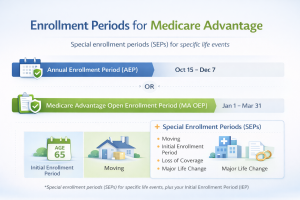
Enrollment Periods for Medicare Advantage

Key Dates to Remember

When considering Medicare Advantage plans, it’s vital to be aware of the key dates associated with enrollment periods. The Annual Enrollment Period (AEP), occurring from October 15th to December 7th each year, is a crucial time when you can review, change, or enroll in Medicare Advantage plans. During this window, beneficiaries can switch from Original Medicare to a Medicare Advantage plan or move between Advantage plans if they find one that better suits their healthcare needs or financial situation.

Ensuring that you’ve examined all aspects of plan changes during this period can lead to improved costs and services coverage, helping you manage your health efficiently.

Another significant timeframe is the Medicare Advantage Open Enrollment Period, which runs from January 1st to March 31st. During this period, those already enrolled in a Medicare Advantage plan can make one change.

Beneficiaries can switch to a different Advantage plan or return to Original Medicare if they find their current plan doesn’t meet their expectations or if they have unexpected healthcare needs following the Annual Enrollment Period. It’s time to reassess your plan choice and ensure your selected coverage aligns with your health priorities, budget constraints, and needs for Medicare services.

The Special Enrollment Periods (SEPs) can occur at various times throughout the year for certain qualifying events, providing flexibility outside the standard dates. These might include moving out of your plan’s service area, qualifying for Medicaid, or losing employer-based health insurance coverage.

Understanding these SEPs is essential, particularly for those undergoing life changes that impact their healthcare coverage. The careful planning and assessment of these key dates provides the ability to ensure continuous healthcare coverage and avoid any service disruptions.

Marking these enrollment dates clearly on your calendar and preparing in advance with a thorough review of your current healthcare needs and available plans can help you make informed decisions. Additionally, resources and digital tools like those available at MedicarePartCPlans.org offer great assistance. By keeping up with these enrollment dates, you can ensure your healthcare needs are confidently met, with no surprises on the horizon.

Special Enrollment Periods Explained

Special Enrollment Periods (SEPs) serve as flexible opportunities outside the usual Medicare Advantage enrollment timelines, allowing beneficiaries to adapt to changing personal circumstances.

These periods arise from specific events or changes in your life, such as relocating to a new region where your current plan is unavailable, experiencing loss of creditable prescription drug coverage, or qualifying for assistance programs like Medicaid. Recognizing how SEPs work can be crucial for maintaining continuous health coverage without the pressure of missed deadlines.

Not every beneficiary will qualify for a SEP, as they’re contingent on specific qualifying factors. For instance, if you decide to move out of your plan’s coverage area, you may open a SEP during which you can choose a new Medicare Advantage plan that suits your new living situation. Likewise, experiencing a significant change in financial status or gaining eligibility for programs like Medicaid can trigger a SEP, enabling a reassessment of your healthcare coverage according to your adjusted capacity or needs.

Another notable SEP situation revolves around network changes; if a plan loses a contract with a significant healthcare provider, resulting in you losing your main care provider, a SEP might allow you to switch plans. These examples exhibit how SEPs are designed to accommodate life changes that impact access to medical services, ensuring you remain covered by Medicare Advantage plans that continue to match your health and financial circumstances.

As you navigate these periods, tapping into available resources like MedicarePlanPartC.org, where we offer detailed tools and information to help gauge your SEPs, can simplify the process. It’s beneficial to stay informed via official resources to understand these SEPs fully so that any life changes don’t result in uninformed or rash decision-making about your health services. By planning for these circumstances, you ensure that your healthcare needs are continuously addressed with suitable Medicare Advantage coverage.

Using Our Free Medicare Plans Finder Tool

Finding the right Medicare Advantage plan in California can feel daunting, but our free Medicare plans finder tool simplifies the process. By inputting your specific location, you can easily compare plans and their associated costs, capturing a snapshot of what healthcare options are available to you in your area.

This tool is invaluable for exploring various Medicare Advantage plans, understanding their benefits, and deciding how they align with your healthcare needs. Let’s delve into how this resource helps you compare advantage plans by location.


Feature Description Benefit Considerations
Geographical Influence Plans are customized based on user location. Offers relevant and specific plan details. Plan availability may vary by region.
Plan Comparison Compare multiple plans side-by-side. Facilitates informed decision-making. Requires understanding of personal needs.
Cost Analysis Breakdown of expenses for each plan. Helps manage healthcare budget effectively. Costs can fluctuate annually.
Coverage Options Details on available health services per plan. Ensures access to needed healthcare services. May include network restrictions.

This table illustrates how our Medicare plans finder tool enhances decision-making by offering tailored insights specific to geographical locations and personal health needs.

How to Easily Compare Advantage Plans by Location

When it comes to Medicare Advantage plans, especially in a vast state like California, location plays a crucial role in plan availability and costs. Our Medicare plans finder tool transforms what can be a complex decision-making process into a straightforward task by allowing you to compare plans based on where you live. This is particularly useful given the diverse range of options available across California’s urban and rural areas.

The tool takes into account the differences in healthcare provider networks, plan types, and coverage options, offering a personalized way to explore which plans might best suit your situation. By inputting your zip code, this digital resource offers a comparison of local Medicare Advantage plans, highlighting the nuances of each option in terms of costs and benefits.

One of the significant advantages is its ability to reflect premiums, deductibles, and out-of-pocket maximums specific to your chosen location. Comparing these elements allows you to tailor your plan selection according to both your healthcare needs and financial situation.

For instance, some areas might offer Medicare Advantage plans with lower premiums but higher deductibles or co-payments. By understanding these trade-offs, you can better align a plan’s structure with your anticipated healthcare expenses and service usage, ensuring efficient budget management without sacrificing quality care.

Additionally, our tool outlines the supplemental benefits included in many Medicare Advantage plans, such as dental, vision, hearing, and wellness programs. These added services can vary significantly by location, making them an essential consideration when comparing plans. Urban centers like Los Angeles may present plans with extensive wellness incentives due to a larger network of service providers, while rural areas might focus more on fundamental healthcare provisions.

Understanding these variations through our comparison tool can help you prioritize what benefits are most relevant to your health needs, thereby ensuring you choose the most suitable plan.

By leveraging this resource, eligible Medicare beneficiaries, including those new to Medicare, can confidently navigate their options, armed with detailed insights into plan specifics by region. Instead of spending hours sifting through individual insurance plans, our tool offers a consolidated view of what’s available at your location, saving you time while increasing the accuracy of your plan selection.

It’s a pivotal step in tailoring your Medicare Advantage plan choice, considering California’s diverse healthcare landscape. For caregivers assisting loved ones, this tool can also facilitate meaningful discussions about the best paths forward, making the process less daunting and more collaborative. With this level of informed comparison, you’ll be empowered to select a plan that not only meets healthcare needs but also supports a financially manageable and health-focused lifestyle.

Understanding the various Medicare Advantage plans available in California and their associated costs can significantly impact your healthcare experience. By researching different options and comparing plans, you can find a plan that aligns with your healthcare needs and financial situation.

Utilize tools like our Medicare plans finder on MedicarePartCPlans.org to explore and compare available plans in your area. Whether you’re new to Medicare or reviewing your existing coverage, being informed about your choices is an essential step towards navigating your Medicare journey confidently.


Compare plans and enroll online

Frequently Asked Questions

What are Medicare Advantage plans in California?

Medicare Advantage plans, also known as Medicare Part C, are options that provide beneficiaries with healthcare coverage through Medicare-approved private insurance companies. These plans bundle Medicare Part A and Part B, and often include additional benefits such as vision, dental, and prescription drug coverage.

What additional services can Medicare Advantage plans include?

Many Medicare Advantage plans offer additional services beyond those covered by Original Medicare, including dental, vision, hearing, and wellness programs. These benefits can help reduce out-of-pocket costs for healthcare services that Original Medicare does not cover.

How do Medicare Advantage plan costs work?

Costs for Medicare Advantage plans can include premiums, deductibles, and out-of-pocket expenses. Plans may have monthly premiums, some of which can be lower than others. Understanding these components helps beneficiaries manage their healthcare budgets effectively.

What is the Annual Enrollment Period for Medicare Advantage plans?

The Annual Enrollment Period (AEP) for Medicare Advantage plans runs from October 15th to December 7th each year. During this time, beneficiaries can review, change, or enroll in a Medicare Advantage plan. This period is crucial for adjusting plan choices to better meet healthcare needs.

How can I compare Medicare Advantage plans in my area?

To compare Medicare Advantage plans in your area, you can use resources like our free Medicare plans finder tool at MedicarePartCPlans.org. By entering your location, you can easily view and compare the available plan options, including specifics like premiums and benefits.

Have Questions?

Speak with a licensed insurance agent

1-877-436-2343

TTY users 711

Mon-Fri: 8am-9pm ET

Find & Compare Plans Online

Speak with a licensed insurance agent

1-877-436-2343TTY 711

Mon-Fri: 8am-9pm ET

ZRN Health & Financial Services, LLC, a Texas limited liability company