BCBS Medicare Supplement Plans

Understanding your options for supplemental Medicare coverage is crucial, especially when considering Blue Cross Blue Shield (BCBS) Medicare Supplement plans, often referred to as Medigap. These plans can help cover various costs that traditional Medicare does not, offering added peace of mind for beneficiaries.

By exploring the different BCBS Medigap options, you can better assess whether their coverage aligns with your healthcare needs and budget. Whether you’re new to Medicare or looking to adjust your existing coverage, discovering how BCBS provides Medigap plans may offer the flexibility and additional financial support you’re seeking.

Key Highlights

  • BCBS Medicare Supplement Plans (Medigap) cover gaps left by Original Medicare, like copayments, coinsurance, and deductibles.
  • Eligibility requires enrollment in Original Medicare Parts A and B and meeting age or specific medical condition criteria.
  • BCBS offers unique customer service benefits beyond standardized Medigap plans, influencing coverage decisions.
  • Medicaid can complement BCBS plans, aiding those with limited income by covering additional services like dental and vision care.
  • Medigap Open Enrollment Period allows access to BCBS plans without health-based premium increases, ensuring coverage stability.

Compare plans and enroll online

Understanding BCBS Medicare Supplement Plans

BCBS Medicare Supplement Plans, often termed Medigap, offer additional coverage to fill the gaps left by Original Medicare. These plans, provided by Blue Cross Blue Shield (BCBS), complement your Original Medicare by covering certain costs that Medicare Part A and B don’t fully cover, such as copayments, coinsurance, and deductibles.

As we delve into BCBS Medicare Supplement Plans, we’ll explore what these plans entail and how they can benefit eligible individuals. We’ll also look at the eligibility requirements and the critical aspects to consider when determining if BCBS plans align with your healthcare needs and financial circumstances.

Understanding BCBS Medicare Supplement Plans

What Are BCBS Medicare Supplement Plans?

BCBS Medicare Supplement Plans are specially designed insurance products that work alongside Original Medicare (Parts A and B) to provide more comprehensive coverage. These plans, familiar to many as Medigap, aim to cover substantial out-of-pocket costs that arise from the standard Original Medicare coverage.

When you opt for BCBS plans, you’re securing additional benefits such as payments for copayments, coinsurance, and deductibles, effectively reducing the medical expenses you might personally bear.

The BCBS network is extensive, meaning that using healthcare services often involves a wide array of in-network providers, though these plans typically allow for flexibility with out-of-network services as well.

Medicare Supplement Plans under BCBS are distinct from typical health plans in that they don’t provide stand-alone benefits. Instead, they supplement Medicare by covering the ‘gaps’ left behind, ensuring a more comprehensive safety net for your healthcare expenses. Each BCBS plan is identifiable using specific letters, such as Plan A through Plan N, each offering a varied level of benefits.

Notably, all Medigap plans are standardized, meaning that while the benefits remain consistent across different insurance providers, BCBS’s instance often comes with its unique customer service benefits and resource accessibility, harnessing BCBS’s nationwide reputation.

However, it’s vital to note what BCBS Medicare Supplement Plans don’t cover. These plans do not include benefits like prescription drugs, vision, or dental care. Hence, they are often paired with other plans to create a well-rounded coverage strategy.

By choosing a supplement plan wisely, beneficiaries can navigate the intricacies of medical-only coverage, leveraging the strengths of Blue Cross Blue Shield’s long-standing service excellence and vast provider resources to enhance their access to healthcare services.

Understanding the network and eligibility is paramount when considering BCBS Medicare Supplement Plans. Each product provided by BCBS is designed to dovetail precisely with Original Medicare, ensuring no overlap yet maximizing coverage benefits.

Thus, educating yourself about the BCBS plans ensures that you make informed decisions about how best to structure your healthcare financing, using Medigap as a pivotal part of your Medicare strategy.

Eligibility Requirements for BCBS Medicare Supplement

To enroll in BCBS Medicare Supplement Plans, potential beneficiaries must first understand the eligibility criteria, which are fairly straightforward but crucial to get right. Primarily, you must be enrolled in Original Medicare Part A and Part B.

These enrollment forms form the backbone of any Medigap policy, as these plans are designed to supplement the comprehensive nature of Original Medicare coverage for various medical services.

Typically, eligibility requires you to be within the 65 years or older age category, although younger beneficiaries may qualify in specific instances, such as with certain disabilities or chronic conditions recognized under Medicare rules.

During your initial eligibility upon turning 65 and securing Medicare Part B, you have a six-month Medigap Open Enrollment Period. This period is critical as it allows guaranteed access to any Medigap plan available in your area, without the need for medical underwriting.

During this time, BCBS cannot deny you coverage based on health conditions or impose increased premiums due to health issues, making this a remarkably favorable window for securing Medigap plans. Outside of this period, eligibility might become more restrictive, with underwriting processes becoming a potential barrier to access at favorable terms.

Further eligibility considerations include residency. BCBS plans are localized, and you generally must reside within the service area where your BCBS Medicare Supplement Plan is offered.

It is also prudent to consider your personal healthcare needs, while eligibility might be granted based on age and Medicare enrollment, understanding your healthcare needs and financial situation will help you decide if a Medigap plan is right for you.

BCBS’s extensive resources provide invaluable assistance, helping ensure that plan members can get personalized advice and navigate their unique insurance needs better.

Ultimately, meeting these eligibility requirements lets you take full advantage of the benefits provided by a BCBS Medicare Supplement Plan. This includes stabilizing your healthcare coverage against unpredictable out-of-pocket expenses while still enjoying BCBS’s renowned network and service quality.

The assurance of added coverage provides peace of mind, knowing you’re better protected against unforeseen medical financial burdens. Navigating these requirements with clarity ensures that your choice is both informed and aligned with your health needs, considering BCBS’s targeted Medigap offerings.

Before enrolling in a BCBS Medicare Supplement Plan, consider the following key factors:

  • Review your current Medicare plan details for compatibility with BCBS supplements.
  • Evaluate your long-term healthcare needs and any chronic conditions.
  • Confirm your residency within a BCBS service area.
  • Understand the six-month Medigap Open Enrollment Period timing.
  • Explore your financial capacity for Medigap plan premiums.
  • Investigate additional BCBS resources to aid your decision-making.
  • Consider any potential travel plans affecting coverage needs.
  • Analyze the balance between existing coverage gaps and potential out-of-pocket expenses.

These considerations will help ensure your BCBS Medicare Supplement Plan choice aligns with your medical and financial priorities.

BCBS Medicare and Medigap Explained

BCBS Medicare Supplement Plans, also known as Medigap, are integral in filling the coverage gaps left by Original Medicare. Offered by Blue Cross and Blue Shield, these plans are not to be confused with other health plans; instead, they aim to complement the coverage provided by Medicare Parts A and B.

Through this discussion, we’ll unravel the substantial differences between BCBS Medicare Supplement Plans and standard Medigap insurance. We’ll also delve into the key benefits that make Medigap an essential consideration for enhanced coverage and peace of mind.

Differences Between BCBS Medicare Supplement and Medigap

When navigating the world of Medicare, understanding the distinctions between BCBS Medicare Supplement Plans and general Medigap plans is crucial. Blue Cross Blue Shield offers a suite of Medicare Supplement plans designed to enhance the coverage provided by Original Medicare.

These plans, often called Medigap, help to pay for additional healthcare services that Medicare Parts A and B do not cover fully. This generally includes expenses such as deductibles, copayments, and coinsurance, which can significantly impact out-of-pocket costs if not addressed.

Understanding these supplemental options begins with recognizing that while all Medigap plans are standardized by Medicare, BCBS brings unique strengths to its policy offerings. Blue Cross may offer distinct added benefits or customer service features, given their expansive network and long history of providing health insurance services.

Thus, when comparing Medicare Supplement options, prospective members can consider the specific advantages that BCBS plans entail, such as longevity, extensive resources, and customized member support.

Additionally, as with all Medigap policies, BCBS Medicare Supplement Plans do not cover services like prescription drugs, vision, or dental care, emphasizing the need for additional coverage strategies.

These gaps illustrate another critical difference: the structure and intent of the coverage provided. The BCBS offerings are especially designed to dovetail seamlessly with Original Medicare, ensuring comprehensive support for any medical services that might burden a beneficiary’s finances otherwise.

It’s also vital to mention that, unlike most health plans, BCBS Medicare Supplement Plans do not apply to individuals as standalone policies, but rather supplement the coverage provided. This distinction emphasizes the importance of understanding what each policy covers and how it fits into the broader picture of a comprehensive healthcare strategy.

In conclusion, while Medigap and BCBS Medicare Supplement Plans may sound interchangeable, appreciating their intricate nuances solidifies the way forward for Medicare beneficiaries.

Key Benefits of Medigap

Medigap, also referred to as Medicare Supplement insurance, presents myriad benefits that enhance the health coverage landscape for Medicare beneficiaries. The core advantage of these plans, including those offered by Blue Cross and Blue Shield, lies in their ability to cover significant health expenses that Original Medicare alone might not adequately support.

By absorbing costs like copayments, coinsurance, and deductibles, Medigap plans substantially mitigate financial risk, providing insured individuals with a vital safety net. Notably, Medigap policies offer stability and predictability in healthcare expenses. Without these supplements, individuals are often left with unforeseen medical costs that can be quite burdensome.

For seniors on fixed incomes, Medigap plans from BCBS serve as a financial cushion, allowing for better budget management and less anxiety about potential health issues impacting their savings.

Additionally, since these plans work directly alongside Original Medicare, they ensure that even unexpected high medical bills do not derail a beneficiary’s financial plans.

Beyond financial security, another significant benefit of Medigap lies in its flexibility. With a Medigap plan, you have the freedom to choose healthcare providers that accept Medicare, a considerable advantage over certain other health plans that may demand in-network provider usage.

This flexibility is crucial for beneficiaries who require specialized care or who travel frequently and need the assurance of widespread coverage availability.

Moreover, Blue Cross Blue Shield’s Medigap plans enhance the member experience through dedicated support services, ensuring individuals can navigate their coverage with ease. The tailored support from BCBS means that members have access to deep resources and knowledgeable customer service to assist in everything from plan selection to claims issues.

Finally, the standardization of Medigap plans across states ensures uniformity in benefits, regardless of the provider. Each standardized plan offers identical benefits, allowing Medicare beneficiaries to compare their options based on plan costs and extra features, like customer support, that companies like BCBS might offer.

By grasping these essential benefits, beneficiaries can make informed decisions about how best to structure their healthcare coverage to include both BCBS’s strength and the comprehensive financial security Medigap provides.


Category Details Key Benefits Considerations
Coverage Options Variety of standardized plans available, aligning with state regulations Extensive coverage reduces out-of-pocket expenses Plan availability may vary by state
Provider Network Access to a wide network of healthcare providers Flexibility to choose doctors and specialists Ensure preferred providers are within the network
Customer Service 24/7 support with dedicated representatives Assistance with claims and questions Response times can vary based on demand
Additional Benefits May include additional services like wellness programs Enhances overall health management Additional costs might be associated with some services

This table offers a concise overview of how BCBS Medicare Supplement Plans differentiate themselves from standard Medigap options while highlighting their substantial benefits for Medicare beneficiaries.

Find & Compare Plans Online

Speak with a licensed insurance agent

1-877-436-2343TTY 711

Mon-Fri: 8am-9pm ET

Navigating Medicare Supplement Plans for Your Needs

Embarking on the journey to find the right Medicare Supplement Plan, commonly known as Medigap, is pivotal in ensuring comprehensive healthcare coverage. These plans, particularly from trusted providers like Blue Cross and Blue Shield (BCBS), address the gaps left by Original Medicare.

You’ll explore how to effectively compare your options to customize a plan that meets your needs and receive the right guidance on utilizing free tools for comprehensive plan comparison. Understanding these elements not only aids in financial security but also enhances your medical service accessibility.

How to Compare Medicare Coverage Options

Comparing Medicare coverage options can feel overwhelming, especially with the array of plans offered by various providers like Blue Cross Blue Shield (BCBS). It’s crucial to start by gaining a comprehensive understanding of what Medicare Supplement Plans (Medigap) cover.

Medigap plans aim to fill the coverage gaps left by Original Medicare Parts A and B. They typically handle supplementary expenses such as copayments, coinsurance, and deductibles, providing financial relief that protects beneficiaries from unexpected medical costs.

When considering your options, delve into the specifics of each plan type. Medigap plans are standardized across providers, identified by letters Plan A through Plan N, each offering different levels of benefits.

For instance, some plans may cover all Part A coinsurance and hospital costs up to an additional 365 days after Medicare benefits are used, while others might cover only portions of coinsurance or copayments. BCBS may provide added benefits like resources and personalized services, which are particularly beneficial for individuals needing comprehensive support.

Look closely at the network accessibility of providers covered under each plan. While BCBS is noted for its expansive network, which allows for flexibility in choosing healthcare providers, other plans may restrict service options, affecting your choice of doctors and hospitals. Understanding these nuances is vital for tailoring a plan to your needs.

Additionally, evaluate the financial aspect. Compare premium costs against your potential out-of-pocket expenses without suitable coverage. Consider how each plan’s benefits align with your health needs and financial planning. Resources such as BCBS’s online tools can aid this process by offering insights into plan differences, helping you make informed decisions.

Seek guidance from Medicare education resources or BCBS representatives to clarify any doubts or questions you might have about these supplemental plans’ specifics. This step ensures you understand not only how Medigap works but also how to maximize the benefits offered by plans such as those from BCBS to enhance your overall Medicare strategy.

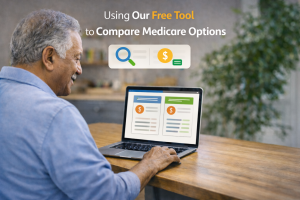
Utilizing Free Tools for Medicare Supplement Plans Comparison

Utilizing Free Tools for Medicare Supplement Plans Comparison

Leveraging free tools for comparing Medicare Supplement Plans, particularly BCBS options, significantly eases the process of selecting a plan that aligns with your coverage needs. To begin with, using online comparison tools enables individuals to view side-by-side analyses of various plan options and their coverages across different providers, including the vast offerings from BCBS Medicare resources.

Such tools can break down complex information into digestible formats, showing clear comparisons of costs, benefits, and covered services, all crucial factors in decision-making. For instance, these tools often display premium amounts, projected out-of-pocket costs, and the coverage each Medigap plan offers, providing transparency and clarity needed to make optimal choices.

An often-used tool on platforms like MedicarePartCPlans.org harnesses technology to guide users systematically through available BCBS plans, utilizing filters such as location and individual healthcare needs. This approach helps personalize the plan comparison process, ensuring recommendations match one’s specific lifestyle and healthcare requirements.

Free tools also often provide educational content that explains terms and coverage specifics in straightforward language. This resourcefulness is crucial for potential plan members who may be new to Medicare or less familiar with specific terminology.

The ability to cross-reference this information with BCBS’s educational resources ensures a deeper understanding and more informed decision-making.

Beyond financial details, these tools may include user reviews and ratings, giving insight into real-life experiences of current and former plan members. It’s important to compare reviews for the best Medicare Supplement plans so you can find a plan for your healthcare needs. This feedback can highlight aspects of customer service or ease of claims processing, which might influence your choice.

Understanding how existing members perceive BCBS’s network coverage and services can direct users toward more satisfactory healthcare experiences.

By effectively utilizing these free tools, individuals can comprehensively navigate the Medigap landscape, comparing BCBS plans to discern all aspects from network options to supplementary benefits. It highlights the importance of comprehensive planning in ensuring complete and suitable healthcare coverage, aiding in long-term medical security and confidence in one’s chosen healthcare provider.

Exploring Additional Coverage Options with Medicaid

When it comes to healthcare, understanding the supplemental options available through Medicaid alongside your current Medicare plan is crucial. These additional coverage avenues can help fill the gaps left by Original Medicare, offering potential relief for beneficiaries concerned about medical-only coverage.

As we delve into integrating Medicaid with existing Medicare plans, we’ll discuss eligibility criteria and key considerations to ensure you maximize your benefits. Exploring how these plans dovetail with a BCBS Medicare Supplement can offer valuable insights into optimizing healthcare coverage and services for individual needs.

When to Consider Medicaid with Your Current Medicare Plan

Choosing when to add Medicaid as a layer of coverage to your existing Medicare plan can be pivotal in managing healthcare expenses efficiently. For beneficiaries navigating the intricacies of Medicare, understanding if and when to incorporate Medicaid can broaden access to vital resources and services, especially for those dealing with limited income or chronic health conditions.

Medicaid serves as a safety net, offering expanded health benefits beyond the reach of typical Medicare coverage. Coupling Medicaid with Blue Cross Blue Shield (BCBS) Medicare Supplement plans can effectively bridge coverage gaps, providing a more comprehensive safety net for beneficiaries.

One critical consideration in this decision is understanding the eligibility requirements for Medicaid. These often differ by state, emphasizing the need for potential beneficiaries to consult local state guidelines when assessing their qualification status.

Generally, Medicaid serves those with lower income, which can include elderly individuals whose out-of-pocket medical expenses might otherwise be financially debilitating.

The combination of Medicaid with BCBS plans can relieve the financial pressure caused by essential services Medicare may not fully cover, such as long-term care services, dental, and vision care, services typically outside the ambit of even comprehensive Medicare Supplement plans.

When examining Medicare Supplement plans available through BCBS, think about how these supplements can be strategically paired with Medicaid to address both medical and cost-related concerns.

Medicare Supplements, renowned for bolstering medical-only coverage, address costs like copayments, coinsurance, and deductibles that Original Medicare Parts A and B don’t cover. Incorporating Medicaid can add further layers of support, ensuring beneficiaries access to a broader network of services and healthcare providers, often essential for those who need specialized care or frequent hospital visits.

Timing is another crucial element. Consider applying for Medicaid when approaching significant shifts in your health or financial circumstances. For those qualifying, initial enrollment periods, akin to those for Medicare Part A and B, present golden opportunities to set up this comprehensive setup.

Understanding these nuances ensures that you’re neither underinsured nor face unforeseen out-of-pocket expenses while accessing the full breadth of benefits Medicaid and Medicare together can provide.

Ultimately, integrating Medicaid is about enhancing the robustness of your healthcare strategy, taking advantage of the extensive networks and member benefits that come with BCBS plans and Medicaid coverage. It’s about positioning yourself within a flexible network system able to address a wide spectrum of needs, ensuring stability in times of health or financial uncertainty.

Careful planning and exploration of additional coverage options like Medicaid can provide peace of mind, knowing you’re better protected against unforeseen medical expenses. Reach out to local Medicare educational resources or utilize BCBS’s dedicated member services to explore how Medicaid can be a strategic complement to your current healthcare plan.

Decoding the Costs of BCBS Medicare Supplement

Delving into the costs associated with BCBS Medicare Supplement Plans demands a thorough understanding of multiple factors influencing these expenses. Costs are intricately connected with components like coverage options, age, location, and chosen plan specifics.

Understanding these permutations helps beneficiaries gauge potential financial commitments. We’ll take a closer look at how enrollment periods can significantly impact cost implications when selecting BCBS Medicare Supplement Plans, providing insights for strategic decision-making.

Comprehending the nuances of Blue Cross Blue Shield’s supplemental health offerings ensures beneficiaries can plan effectively and maximize their financial advantage.

Understanding Enrollment Periods and Cost Implications

Navigating the enrollment periods for BCBS Medicare Supplement Plans is crucial to optimizing both coverage benefits and financial commitment. With Original Medicare, enrollment processes are fairly straightforward.

However, with Medicare Supplement Plans offered by Blue Cross Blue Shield (BCBS), understanding the nuances of timing can significantly impact your costs. These supplementary plans provide essential coverage that addresses medical-only coverage gaps left by Original Medicare, yet their cost structures are closely tied to specific enrollment periods and individual health conditions.

First and foremost, the Medigap Open Enrollment Period is paramount. This period begins when you’re 65 or older and enrolled in Medicare Part B. The six-month window allows you to join any BCBS Medicare Supplement Plan available in your area without the liability of health condition-based premium increases.

Joining during this period is advantageous because it allows premium stabilization, and insurance companies cannot leverage medical underwriting to set your costs, ensuring you get a fair shake regardless of your health status. You will also have access to the extensive BCBS network without worrying about potentially higher rates due to personal health assessments.

If you miss this crucial Medigap Open Enrollment Period, know that enrolling in a BCBS Medicare Supplement Plan becomes subject to different rules and cost implications.

During specific times or under special circumstances, such as losing other health coverage or having a Medicare Advantage Plan terminated, you might land a chance to enroll in Medigap without underwriting, but these situations are unique and might not align with every individual’s needs.

Consequently, outside the open enrollment windows, costs may increase, as factors such as pre-existing conditions become determining elements influencing your premium rates. This variability emphasizes the need to act during favorable periods to control costs effectively.

Other periods to consider include the General Enrollment Period for Original Medicare from January 1 to March 31 each year, where those initially deferring enrollment in Part B can sign up. Subsequently, a six-month Medigap enrollment period kicks in, though typically at slightly higher premiums due to the lack of guaranteed issue rights.

Understanding these details can streamline your planning, mitigating unnecessary financial burdens by knowing when to capitalize on cost-effective enrollment opportunities.

Comparatively understanding the potential cost implications linked to the various BCBS Medicare Supplement Plans further arms you with essential knowledge. Each plan, ranging from Plan A to Plan N, slightly varies in cost, influenced by coverage specifics.

A Plan F, for instance, might cover all deductibles, while a Plan G requires you to account for Part B deductibles, impacting final costs. Recognizing the alignment of these plan features with anticipated healthcare needs ensures a strategic approach to managing long-term expenses, enabling financial predictability.

In summary, to mitigate cost implications associated with BCBS Medicare Supplement Plans effectively, a strategic, informed approach to enrollment is pivotal. Enrolling during key periods and understanding your plan choices enables you to optimize your healthcare coverage while controlling expenses.

A deep dive into Blue Cross’s supplemental health plan features and enrollment timing, alongside an evaluation of your healthcare needs, can ensure you benefit the most from your BCBS Medigap plan. This strategic choice not only enhances your healthcare experience but also keeps you financially savvy, lowering potential cost concerns as you navigate your medical needs throughout retirement.

BCBS Medicare Supplement plans offer a valuable solution for those looking to expand their Medicare coverage and reduce out-of-pocket expenses. Whether you need assistance with copayments, coinsurance, or deductibles, these plans can provide comprehensive support tailored to your healthcare needs.

Exploring BCBS Medigap options enables you to make well-informed decisions about your healthcare future. Take advantage of the resources and tools available to compare plans and find the one that aligns with your individual needs and preferences. For more information, visit our website to start your journey toward enhanced Medicare coverage today.


Compare plans and enroll online

Frequently Asked Questions

What are BCBS Medicare Supplement Plans, and how do they work?

BCBS Medicare Supplement Plans, also known as Medigap, are insurance products designed to cover costs not fully paid by Original Medicare Parts A and B. These plans help with expenses like copayments, coinsurance, and deductibles, reducing your out-of-pocket costs and providing more comprehensive healthcare coverage.

Who is eligible to enroll in BCBS Medicare Supplement Plans?

To be eligible, you must be enrolled in Original Medicare Parts A and B. Generally, you must also be 65 years or older. Younger individuals may qualify if they have certain disabilities or chronic conditions recognized by Medicare. Additionally, location and residency requirements might apply.

What benefits do BCBS Medicare Supplement Plans not cover?

These plans do not cover prescription drugs, vision, or dental care. Beneficiaries often add other insurance plans to fill these additional coverage gaps. It’s important to consider how these limitations fit into your overall healthcare strategy.

How does the Medigap Open Enrollment Period affect BCBS Medicare Supplement Plans?

The Medigap Open Enrollment Period is a six-month window that begins when you are 65 or older and enrolled in Medicare Part B. During this time, you can join a BCBS Medicare Supplement Plan without being subject to medical underwriting, helping secure more predictable premium costs.

Can Medicaid be used alongside BCBS Medicare Supplement Plans?

Yes, Medicaid can complement BCBS Medicare Supplement Plans, especially for beneficiaries with limited income. Medicaid offers additional services that Medigap does not cover, such as dental and vision care, providing a broader range of healthcare support.

Have Questions?

Speak with a licensed insurance agent

1-877-436-2343

TTY users 711

Mon-Fri: 8am-9pm ET

Find & Compare Plans Online

Speak with a licensed insurance agent

1-877-436-2343TTY 711

Mon-Fri: 8am-9pm ET

ZRN Health & Financial Services, LLC, a Texas limited liability company