The Annual Election Period (AEP) for Medicare Advantage is an essential timeframe each year when Medicare beneficiaries can review and make changes to their current health and drug coverage. Understanding these enrollment periods can empower individuals who wish to switch plans, adjust existing coverage, or explore Medicare Advantage options for the first time. During AEP, from October 15 to December 7, beneficiaries have the chance to compare and decide on plans that best suit their healthcare needs, making it a critical opportunity for informed decision-making about personal health coverage.







Annual Election Period for Medicare Advantage: Understanding Enrollment Periods
Key Highlights
- The Annual Election Period (AEP) allows Medicare beneficiaries to switch plans or adjust coverage from October 15 to December 7.
- Medicare Advantage plans, offered by private insurers, include additional benefits not covered by Original Medicare.
- Enrollment periods affect when beneficiaries can join or switch Medicare Advantage plans effectively.
- Special Enrollment Periods allow plan changes due to life events like moving or losing current coverage.
- The Medicare plans finder tool on MedicarePartCPlans.org helps compare options to meet healthcare needs.
Compare plans and enroll online
Understanding Medicare Advantage: Key Information for Beneficiaries
Medicare Advantage plans, known as Part C, offer an alternative to Original Medicare by providing coverage through private insurers. These plans encompass both Part A and Part B benefits, often including additional services like dental, vision, and wellness programs. When considering a Medicare Advantage plan, it’s important to understand how it differs from Original Medicare, what services are covered, and how it aligns with your healthcare needs. This section delves into the basics of Medicare Advantage, offering insights into plan options, comparing coverage, and understanding how these plans can be tailored to fit diverse healthcare requirements.

What Are Medicare Advantage (Part C) Plans?
Medicare Advantage plans, or Part C, are offered by private insurance companies approved by Medicare to provide all Part A and Part B services. Unlike Original Medicare, these plans often come with additional benefits, such as prescription drug coverage, which is typically included in most Advantage plans. A standout feature of Medicare Advantage plans is their ability to offer extra benefits, including vision, dental, and hearing, which are not covered by Original Medicare. This means that beneficiaries can potentially have a more comprehensive coverage plan tailored to their specific needs.
Medicare Advantage plans are structured around a network of providers, which can include Health Maintenance Organizations (HMOs), Preferred Provider Organizations (PPOs), and Private Fee-for-Service plans (PFFS). Each type of plan has different rules about how you can receive your services, where you can receive care, and whether you need referrals to see specialists. For beneficiaries, this means selecting an Advantage plan requires careful consideration of both the network and the additional benefits offered.
When considering an Advantage plan, it’s important for Medicare beneficiaries to evaluate the characteristics of each available plan. Costs can vary significantly between plans, including the premiums, copayments, and coinsurance amounts. Additionally, the specific network details and extras offered can make a big difference in service accessibility. Many plans offer the convenience of coordinated care and one-stop shopping for all your health care costs through a single plan, which can greatly simplify managing healthcare needs.
MedicarePartCPlans.org aims to assist seniors in evaluating their options, offering a resource to compare plans effectively. Understanding these key aspects ensures that Medicare beneficiaries select a Medicare Advantage plan that best fits their healthcare requirements and preferences.
Comparing Medicare Advantage to Original Medicare
When deciding between Medicare Advantage and Original Medicare, it’s crucial to weigh the differences in coverage options and how they impact healthcare needs. Original Medicare, comprised of Part A and Part B, covers hospital and medical services, respectively. However, it often lacks coverage for additional services, leaving gaps in areas like dental, vision, and hearing. In contrast, many Medicare Advantage plans provide this additional coverage, offering a more holistic approach to healthcare.
One significant difference lies in the costs associated with each plan type. While Original Medicare might have a set premium for Part B, a component that most beneficiaries must pay, Medicare Advantage plans may have lower premiums, but often come with copayments and out-of-pocket limits that vary considerably. It’s vital for beneficiaries to assess these financial elements to determine which plan fits their budget while meeting healthcare needs.
Moreover, Medicare Advantage plans often operate within network restrictions, meaning enrollees might need to select healthcare providers within the plan’s network. This could be an HMO or PPO, each with its own rules regarding out-of-network service coverage. Original Medicare provides greater freedom in choosing healthcare providers but lacks the coordinated care aspects that many Advantage plans offer.
For those managing chronic conditions, the coordinated care available through an Advantage plan could be beneficial, providing integrated services that may simplify the navigation of healthcare services. Utilizing our free Medicare plans finder tool on MedicarePartCPlans.org, beneficiaries can easily compare plans, aligning coverage and benefits with personal healthcare preferences. Overall, selecting between Medicare Advantage and Original Medicare hinges on assessing specific healthcare needs, budget constraints, and the preference for provider flexibility or comprehensive coverage.
Find & Compare Plans Online
Enrollment Periods: A Comprehensive Overview
Understanding the various enrollment periods for Medicare Advantage is crucial for beneficiaries to make informed decisions. These periods govern when you can initially enroll, switch, or join a plan, impacting your coverage options significantly. This concise overview will delve into defining enrollment periods for Medicare beneficiaries and highlight the importance of the annual enrollment periods. Navigating these timelines effectively ensures that you maintain optimal coverage, tailor your healthcare plan needs, and leverage all benefits available to you.
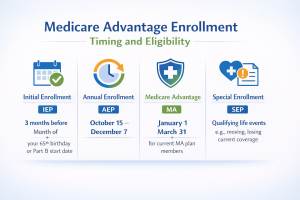
Defining Enrollment Periods for Medicare Beneficiaries
Enrollment periods are essential timelines set by Medicare during which beneficiaries can make critical decisions about their healthcare coverage options. For those new to Medicare or considering a switch to Medicare Advantage, understanding these periods is vital. The initial enrollment period (IEP) serves as the first opportunity for newly eligible individuals to enroll in Medicare Part C. During this period, which typically spans the seven months surrounding your 65th birthday, you have the chance to join a Medicare Advantage plan that aligns with your healthcare preferences and needs.
Beyond the IEP, the annual election period (AEP), often called the annual enrollment period, runs from October 15 to December 7 each year. This period allows current Medicare beneficiaries to reevaluate their healthcare needs and make changes to their Medicare Advantage plan or switch back to Original Medicare, if desired. It’s a critical time to assess new plan offerings, compare benefits, and consider factors like network restrictions and additional services.
Mid-year changes generally aren’t available outside the standard periods, emphasizing the importance of fully grasping the enrollment period dynamics. Leveraging the free Medicare plans finder tool on MedicarePartCPlans.org can help beneficiaries comparing plan options efficiently. It’s important for caregivers assisting family members to be aware of these timelines to ensure that loved ones maintain appropriate healthcare coverage. Beneficiaries should consider both budget constraints and healthcare needs when evaluating options, ensuring that their selected plan offers the best match for their circumstances.
The Importance of Annual Enrollment Periods
The annual enrollment period is a pivotal time for Medicare beneficiaries to reassess their healthcare plans and ensure they’re getting the most suitable coverage. Each year, Medicare Advantage plans can adjust their benefits, premiums, and network providers, making it essential to review any changes that might affect your current plan. From October 15 to December 7, beneficiaries have the opportunity to evaluate and make necessary adjustments to their Advantage plan or switch altogether.
Participating in the annual election period also presents a chance to join a different plan that better fits your evolving healthcare needs. Whether achieving improved coverage for prescription drugs or incorporating additional benefits like vision and dental into your healthcare plan, this period is an ideal time to explore all available options. With an ever-growing range of plans and coverage levels, choosing the right one for your situation means staying informed about the latest updates.
For those already enrolled in a Medicare Advantage plan, considering plan alterations during this time involves weighing current coverage against any new offerings. Evaluating premium changes, potential costs, or added benefits can greatly impact the overall satisfaction with your healthcare plan. Utilizing the resources provided by MedicarePartCPlans.org, including the Medicare plans finder tool, can guide this decision-making process and help beneficiaries find the perfect fit for their needs. With careful consideration and timely action during the annual enrollment period, beneficiaries can effectively maintain healthcare coverage that aligns seamlessly with their individual requirements.
Special Enrollment: Opportunities Outside Standard Periods
Understanding the special enrollment period is essential for Medicare beneficiaries who may need to join or switch plans outside the standard enrollment windows. This section explores what qualifies you for a special enrollment, emphasizing its significance for those experiencing life changes that impact coverage needs. Beneficiaries will gain insights into eligibility criteria, ensuring they don’t miss crucial opportunities to adjust their Medicare Advantage plans effectively and without unnecessary delays.
Qualifying for Special Enrollment Periods
The special enrollment period offers a unique chance for Medicare beneficiaries to join or change their Advantage plan outside the regular annual election window. Recognizing which life events trigger these enrollment opportunities is crucial. Events such as moving to a different service area, losing current coverage due to involuntary reasons, or changes in income affecting your plan eligibility can initiate a special enrollment period. This enrollment period allows older adults the flexibility to adjust their healthcare plans in response to significant life changes that could impact their access to medical services or affect their existing coverage.
For those turning 65, the initial enrollment period is typically your first introduction to enrolling in Medicare. However, life isn’t always predictable, and circumstances might require a change after that. For instance, if you’ve recently moved, your previous Advantage plan may not cover your new area, necessitating a special enrollment period to secure appropriate coverage without waiting for the next annual election. Understanding that these opportunities exist provides peace of mind that your healthcare needs can remain adequately covered, no matter where life takes you.
Additionally, certain qualifying events such as losing employer-based health insurance after retirement or a significant change in income can also prompt a special enrollment opportunity. It’s vital for Medicare beneficiaries to be aware of these conditions to capitalize on the chance to join a plan that better suits their changing needs. Throughout these processes, using resources like the Medicare plans finder tool available on MedicarePartCPlans.org can help you compare options effortlessly, ensuring that the selected plan meets healthcare expectations and budget considerations. Mindful of the nuances surrounding special enrollments, older adults and caregivers are well-equipped to navigate Medicare Advantage adjustments, aligning benefits with evolving healthcare demands.
Initial Enrollment: A Crucial Time for New Beneficiaries
For those new to Medicare, the initial enrollment period (IEP) is an essential milestone that sets the stage for future healthcare decisions. This period is a golden opportunity to join a Medicare Advantage plan that meets your specific needs. During the IEP, which spans seven months surrounding your 65th birthday, beneficiaries have the chance to start their Part C coverage. Understanding the steps and decisions involved is vital for maximizing the benefits of Medicare Advantage. Let’s explore the necessary actions during the initial enrollment to secure a suitable insurance plan and ensure comprehensive coverage.
Steps to Take During the Initial Enrollment Period
Diving into the initial enrollment period is a critical step for older adults embarking on their healthcare journey with Medicare. This seven-month window around your 65th birthday is your first opportunity to enroll in Medicare Part C, commonly known as Medicare Advantage. It’s an essential time to evaluate your healthcare needs and enroll in a plan that suits both your medical and financial circumstances. During this period, not only do you have the option to enroll in a Medicare Advantage plan, but you also have the chance to incorporate additional services such as dental, vision, and prescription drug coverage that aren’t provided by Original Medicare. Therefore, assessing a plan’s benefits and network comprehensively is crucial.
One of the first steps is to research thoroughly using reliable resources like MedicarePartCPlans.org, which offers a Medicare plan finder tool to help you compare various options available in your area. Such tools can simplify finding a plan that aligns with your preferences, offering insights into plan benefits, premiums, additional services, and network restrictions. As you examine potential plans, consider factors such as out-of-pocket costs, including premiums, copayments, and deductibles. The goal is to find a plan that not only offers comprehensive coverage but also fits within your budget.
Another pivotal aspect is understanding your healthcare provider network. Medicare Advantage plans often require you to use a network of doctors and facilities; thus, checking whether your preferred providers and hospitals are included in the plan’s network is important. This step ensures you retain access to your trusted healthcare providers while availing additional benefits offered by the plan.
Moreover, ensure you are adequately informed about the different types of Medicare Advantage plans available, such as HMOs, PPOs, and PFFS plans, each with unique rules concerning referrals and network use. Engaging with knowledgeable Medicare advisors or leveraging educational resources can further clarify these distinctions, facilitating better decision-making. Remember, once the initial enrollment period closes, unless you qualify for a special enrollment period, your next opportunity to join, leave, or change plans will be the annual enrollment period.
Ultimately, thoughtful, well-researched steps during the initial enrollment period can help secure an advantageous Medicare Advantage plan, ensuring peace of mind and satisfactory healthcare coverage from the outset of your Medicare journey. Use all available tools and resources effectively to navigate this initial stage wisely, setting a solid foundation for all future healthcare planning.
Continue your Medicare journey with these valuable tips to optimize your preparation and decision-making during the initial enrollment period:
- Carefully compare all available Medicare Advantage plans to identify those that align with your healthcare requirements and budget constraints.
- Review ratings and customer feedback on plans to gauge satisfaction and service quality.
- Consider potential out-of-pocket expenses beyond premiums, including copayments, deductibles, and maximum limits.
- Investigate the inclusion of preferred healthcare providers within the plan’s network for continuity of care.
- Explore supplemental benefits such as dental, vision, and wellness programs that might enhance well-being.
- Seek advice from trusted Medicare advisors to clarify any uncertainties before making your choice.
- Stay informed on deadlines to avoid missing the enrollment window and potential consequences.
These strategies ensure a well-rounded approach to securing your Medicare Advantage plan effectively.
Navigating Medicare Advantage Enrollment Choices
Choosing a Medicare Advantage plan involves understanding various enrollment periods, which can significantly influence your healthcare coverage. It’s crucial to know when you can sign up, switch plans, or leave a Medicare Advantage plan, especially during the annual election period. By navigating these choices effectively, beneficiaries can optimize their benefits and ensure the best plan for their needs. This section delves into using the Medicare Open Enrollment Period effectively to make informed and beneficial decisions towards your healthcare coverage.
| Consideration | Options | Evaluation Criteria | Potential Advantages | Potential Drawbacks |
|---|---|---|---|---|
| Plan Types | HMO, PPO, SNP | Network Flexibility, Coverage Needs | Comprehensive Coverage, Additional Benefits | Network Restrictions, Costs |
| Costs | Premiums, Copayments, Deductibles | Affordability, Budget | Lower Monthly Costs, Predictable Expenses | Unexpected Out-of-pocket Costs |
| Provider Network | In-Network, Out-of-Network | Access to Preferred Doctors | Wide Doctor Choice, Specialized Care | Limited Access, Referrals Needed |
| Coverage | Medical, Prescription Drugs | Health Needs, Existing Medical Conditions | Tailored Coverage, Comprehensive Care | Certain Exclusions, Plan Limitations |
| Reputation | Customer Reviews, Ratings | Customer Satisfaction, Plan Stability | Reliable Plans, Peace of Mind | Lack of Detailed Feedback |
This table outlines strategic considerations for effectively navigating the Medicare Advantage enrollment process during the Annual Election Period.
Using the Medicare Open Enrollment Period Effectively
The Medicare Open Enrollment Period, also known as the Annual Election Period (AEP), is a vital time for beneficiaries to reassess and adjust their healthcare coverage. Occurring annually from October 15 to December 7, it provides the opportunity to join a Medicare Advantage plan, switch between different Medicare Advantage plans, or return to Original Medicare. Understanding how to leverage this period is crucial for ensuring your insurance meets your evolving healthcare needs. It’s also the perfect opportunity to incorporate or alter your prescription drug plan, a common component of many Medicare Advantage plans.
During Open Enrollment, beneficiaries can compare plans in detail, evaluating factors such as coverage for drugs, additional benefits, costs like premiums and copayments, and plan networks. This evaluation should consider changes to last year’s Medicare Advantage plan offerings, as annual adjustments might affect your coverage, costs, or provider network. New or enhanced benefits, like dental or vision coverage, commonly added to plans can significantly impact your decision. Therefore, being informed about these changes helps you optimize your Medicare Advantage plan.
For those looking to manage specific medical conditions or who anticipate significant healthcare needs, examining networks for included providers and service accessibility is key. Many plans offer coordinated care with integrated health and drug coverage, simplifying the management of healthcare, especially for those dealing with chronic conditions. These comprehensive plans can reduce the hassle of multiple insurance providers, as most services are bundled within one option.
Utilizing MedicarePartCPlans.org’s free Medicare plans finder tool can simplify this comparison process. By entering your location and specific coverage requirements, you can view a range of suitable Medicare Advantage plans. This resourceful tool aids in narrowing down options that align with your health priorities and financial objectives, considering essential elements such as insurance costs, coverage details, and network requirements. With careful planning during the Open Enrollment Period, beneficiaries can assure themselves of health insurance that meets their unique requirements, offering peace of mind and tailored healthcare satisfaction.
Understanding the annual election period for Medicare Advantage is crucial for making well-informed decisions about healthcare coverage. This period provides an opportunity to review and adjust your plan to better align with your evolving health needs and financial situation. It’s important to thoroughly compare available options, taking into consideration the variety of benefits, costs, and coverage features of different plans. By leveraging tools such as MedicarePartCPlans.org, you can gain insights into diverse plans available in your area, ensuring your healthcare needs are met effectively. Stay informed and proactive to maximize the benefits of your healthcare choices.
Compare plans and enroll online
Frequently Asked Questions
What is the Annual Election Period (AEP) for Medicare Advantage?
The Annual Election Period (AEP) for Medicare Advantage is a timeframe each year, from October 15 to December 7, when Medicare beneficiaries can review, switch, or adjust their current health and drug coverage. It allows individuals to compare plans that suit their healthcare needs.
How do Medicare Advantage plans differ from Original Medicare?
Medicare Advantage plans, or Part C, are provided by private insurers and include all Part A and Part B benefits. They often offer additional services like dental and vision, unlike Original Medicare, giving a more comprehensive coverage.
What are Special Enrollment Periods in Medicare Advantage?
Special Enrollment Periods allow Medicare beneficiaries to join or switch plans outside standard periods due to life events such as moving or losing current coverage. They offer flexibility in adjusting healthcare plans when significant life changes occur.
What should I consider when choosing a Medicare Advantage plan?
When selecting a Medicare Advantage plan, consider factors like the network of providers, costs including premiums and copayments, additional benefits, and whether the plan meets your healthcare needs and budget. Use resources like the Medicare plans finder tool on MedicarePartCPlans.org to compare options.
How can the Medicare plans finder tool assist me?
The Medicare plans finder tool on MedicarePartCPlans.org helps beneficiaries compare Medicare Advantage plans based on coverage, costs, and benefits in their area, supporting informed decisions about healthcare needs.
Have Questions?
Speak with a licensed insurance agent
1-877-436-2343
TTY users 711
Mon-Fri: 8am-9pm ET
Find & Compare Plans Online
ZRN Health & Financial Services, LLC, a Texas limited liability company