Can I Sign Up for Medicare Advantage at Any Time?

Medicare Advantage plans, also known as Medicare Part C, offer a unique way to receive your Medicare benefits through private insurance companies. Understanding when and how you can enroll in these plans is essential to maximizing your healthcare coverage. This guide outlines crucial aspects of Medicare Advantage enrollment, including initial enrollment periods, special enrollment circumstances, and annual opportunities to modify your coverage.

Whether you’re new to Medicare or reassessing your options, this resource provides key insights to help navigate the enrollment process effectively, ensuring you make informed decisions about your healthcare future.

Key Highlights

  • Medicare Advantage plans provide alternative coverage through private insurers, offering additional benefits beyond Original Medicare.
  • Enrollment in Medicare Advantage occurs during specific periods: Initial Enrollment, Annual Open Enrollment, and Special Enrollment Periods.
  • Special Enrollment Periods allow changes outside standard windows due to qualifying life events, ensuring continuous coverage.
  • Medicare Advantage plans offer integrated services like vision, dental, and Part D, often with lower out-of-pocket costs.
  • The Medicare Part C Plans Finder Tool helps beneficiaries compare plans based on individual healthcare needs and location.

Compare plans and enroll online

Understanding Medicare Advantage Plans

Diving into Medicare Advantage plans can seem daunting, but it’s essential to grasp how they fit within the broader Medicare ecosystem. These plans, also known as Part C, offer an alternative to Original Medicare, presenting additional benefits and coverage options. As you explore these plans, it’s crucial to understand the differences between Medicare Advantage and Original Medicare. Furthermore, you’ll discover the range of benefits these plans bring to the table, which can significantly enhance your overall healthcare experience.

How Medicare Advantage Differs from Original Medicare

How Medicare Advantage Differs from Original Medicare

To truly appreciate the offerings of Medicare Advantage, one must first understand how it contrasts with Original Medicare. Original Medicare, made up of Part A and Part B, primarily focuses on hospital and medical insurance. Part A covers hospitalization and inpatient care, while Part B covers outpatient services, physician visits, and preventive services. While this may seem comprehensive, there are notable gaps. For instance, Original Medicare doesn’t typically cover prescription drugs, dental, vision, or hearing, leaving beneficiaries to seek supplemental plans or incur out-of-pocket costs for these essential services.

Medicare Advantage, however, aims to fill these gaps by offering an all-in-one alternative to Original Medicare. These plans, provided by private insurance companies approved by Medicare, must cover everything Original Medicare does but often include extra benefits. For instance, it’s common for Medicare Advantage plans to bundle in Part D prescription drug coverage along with additional services like vision care, dental checkups, and wellness programs. Some plans even include coverage for gym memberships, enhancing the beneficiary’s lifestyle beyond basic medical needs.

Another significant difference lies in the cost structure. Original Medicare offers standard pricing across most services with a consistent out-of-pocket spending structure. In contrast, Medicare Advantage plans often have varied copayment and coinsurance rates, and some may offer network-based pricing, which could result in lower out-of-pocket expenses if beneficiaries stick to in-network providers. This network-based approach mirrors that of HMOs and PPOs, where plan members are encouraged to use a specified network of hospitals and doctors, potentially leading to cost savings and streamlined services.

Moreover, Medicare Advantage plans can offer a level of predictability and convenience. By consolidating healthcare needs under a single plan, beneficiaries can more easily manage their insurance and healthcare services. This coordination can be a massive relief for those who find navigating multiple insurance policies cumbersome. While understanding how Medicare Advantage differs from Original Medicare may require some initial effort, the potential benefits and comprehensive coverage options can make it a compelling choice for many beneficiaries seeking more than what Original Medicare alone offers.

Benefits of Choosing a Medicare Advantage Plan

Choosing a Medicare Advantage plan can open up a world of benefits that extend beyond the conventional coverage provided by Original Medicare. One of the standout advantages lies in the comprehensive coverage options these plans typically offer. By bundling services together, beneficiaries enjoy a seamless integration of health services, often including those not covered by Original Medicare, such as dental, vision, and even hearing aids. This can dramatically lessen the burden of healthcare expenses that might otherwise accumulate when seeking supplemental plans for these additional needs.

The added value doesn’t stop there. Many Medicare Advantage plans offer wellness benefits like gym memberships, tailored fitness programs, and wellness visits, promoting a healthy lifestyle that can lead to better overall well-being. Additionally, these plans often come with the convenience of an included Part D prescription drug plan. This integration streamlines the process for beneficiaries who would otherwise need to juggle separate policies for medical and drug coverage. This consolidation can significantly simplify managing healthcare needs, directly alleviating the stress of dealing with multiple plans.

Cost-effectiveness is another area where Medicare Advantage plans shine. These plans often boast competitive pricing structures, such as capped out-of-pocket expenses, which Original Medicare does not provide. This can offer beneficiaries a sense of security, knowing that their healthcare costs have an upper limit, regardless of the services needed within a year. Furthermore, by using a network of doctors and hospitals efficiently, many beneficiaries can control their spending more effectively compared to the standard fee-for-service model of Original Medicare.

As an enrollment consideration, Medicare Advantage plans often come with the support and guidance of insurance providers who focus on customer service, helping explain benefits clearly and assisting with plan selections that match an individual’s healthcare needs and budget. This personal touch can be beneficial as it helps ensure that beneficiaries are well-informed about their healthcare choices. In the end, choosing a Medicare Advantage plan isn’t just about added coverage. It also brings peace of mind, convenience, and potentially significant savings, all invaluable for beneficiaries navigating the complex world of Medicare.


Features Coverage Enrollment Cost
Beneficiaries Comprehensive health services Annual enrollment periods Variable, includes premiums and copayments
Plan Types Includes vision, dental, and hearing Special enrollment periods for qualifying events Original Medicare cost-sharing applies
Network Prescription drug plans often included Automatic disenrollment from Original Medicare Out-of-pocket maximum limit

This table highlights how Medicare Advantage plans offer a comprehensive and integrated approach compared to Original Medicare.

Enrollment Periods for Medicare Advantage

Understanding the Medicare Advantage enrollment periods is crucial for those looking to take full advantage of their plans. Whether you’re just reaching Medicare eligibility or currently navigating your benefits, knowing when you can enroll or make changes ensures you’re maximizing your healthcare options. The key enrollment windows you’ll encounter include the Initial Enrollment Period and the Annual Open Enrollment Period. Each of these periods offers distinct opportunities for signing up, adjusting plans, or switching back to Original Medicare, and it’s essential to grasp their significance and timing.

Initial Enrollment Period: Your First Opportunity

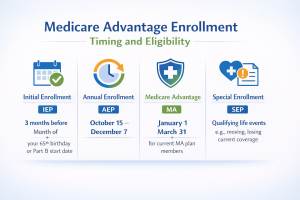
The Initial Enrollment Period (IEP) is your first opportunity to sign up for a Medicare Advantage plan, often referred to as Part C. This seven-month window includes the three months before the month you turn 65, the month of your birthday, and the three months afterward. During this period, you can join, disenroll, or switch Medicare Advantage plans as needed. Understanding the specifics of this timeframe not only opens the door to Medicare Advantage but also allows you to plan carefully in line with your healthcare and financial needs.

Medicare beneficiaries often discover that enrolling in a Medicare Advantage plan during their IEP comes with several benefits. For one, this period provides a seamless transition from any existing health insurance to Medicare Advantage, ensuring there’s no gap in coverage. It’s a crucial time to evaluate your current healthcare needs and see how they align with the benefits offered under different Medicare Advantage plans. As these plans typically include hospital and medical insurance (like Part A and B) and often additional benefits, it’s the perfect time to secure a comprehensive coverage plan that can serve well into your retirement.

While many find the array of benefits compelling, it’s essential to note that Medicare Advantage plans have different structures compared to Original Medicare. These plans might include in-network provider restrictions but often offer lower out-of-pocket costs and added benefits like dental, vision, and prescription drug coverage. The Initial Enrollment Period is a valuable moment to consider such factors and opt for a plan that matches your lifestyle and health care needs best.

Another significant advantage of enrolling during the IEP is the straightforward eligibility criteria. You’re eligible as long as you have Medicare Part A and Part B, reside in the plan’s service area, and don’t suffer from end-stage renal disease (ESRD), except in special circumstances. Avoiding penalties and late enrollment fees by enrolling during this period can save costs and streamline your benefits and coverage.

Grasping the importance of the IEP and the enrollment options it provides can set you on the path to optimal healthcare choices. With a clear understanding of what’s available, you can organize your coverage priorities and potentially unlock a range of benefits that otherwise might remain inaccessible if forgoing Medicare Advantage during this foundational period.

Find & Compare Plans Online

Speak with a licensed insurance agent

1-877-436-2343TTY 711

Mon-Fri: 8am-9pm ET

Annual Open Enrollment: When Changes Can Be Made

The Annual Enrollment Period (AEP), also known as the Annual Open Enrollment Period, runs each year from October 15 to December 7. This period allows current Medicare beneficiaries to make crucial changes to their Medicare Advantage coverage. Whether you’re looking to switch plans, return to Original Medicare, or add or drop a Part D prescription drug plan, this timeframe is designed for you to reassess and adjust your healthcare coverage based on any changes in health needs or financial considerations that have arisen over the past year.

During open enrollment, beneficiaries have the flexibility to compare different Medicare Advantage plans and determine which one offers the best coverage and benefits. This period is particularly advantageous because insurance companies can introduce new plans, adjust existing benefits, or modify costs, impacting your overall satisfaction with your current choice. A proactive approach during the AEP can ensure that changes in your healthcare demands are matched with the most suitable insurance options available, without having to wait until the next year.

It’s also important to understand how any changes in the broader landscape, such as modifications to the Medicare system or shifts in health care policy, might influence your coverage decisions. The Annual Enrollment Period provides a window to align your Medicare Advantage plan with these updates firsthand. Checking in with a Medicare insurance educator or using resources such as the MedicarePartCPlans.org finder tool can help clarify the adjustments you might consider amid policy shifts.

Furthermore, the Annual Enrollment Period is essential for managing costs. Beneficiaries can review plan pricing, including premiums, out-of-pocket maximums, and copay levels, to find plans offering optimal cost efficiency for their situation. Given that healthcare needs can change as you age, reassessing your plan during open enrollment ensures your coverage remains affordable and comprehensive.

By leveraging the opportunities of the AEP, Medicare Advantage enrollees can maintain control over their healthcare flow and financial stability. For adults ages 60–85 who are eligible for Medicare, the annual opportunity to revisit and refine their plan choices is invaluable in ensuring they affordably and adequately meet their evolving healthcare needs.

As you consider how best to navigate the Annual Enrollment Period, here are several key factors to keep in mind:

  • Review and compare plan costs, including premiums and out-of-pocket expenses, for optimal financial management.
  • Evaluate coverage options to ensure alignment with current health requirements and anticipated future needs.
  • Consider new plan introductions and benefit modifications by insurance companies that might better suit your circumstances.
  • Stay informed about updates and changes in Medicare policies that may impact your coverage decisions.
  • Utilize available resources and tools to assist in making informed choices during this critical window.
  • Reflect on any changes in your healthcare needs over the past year and how they affect your plan’s suitability.
  • Ensure your plan choice aligns with both your budgetary constraints and healthcare priorities.

These considerations can guide you in making well-informed decisions during the Annual Enrollment Period.

Medicare Advantage Enrollment Rules and Deadlines

Medicare Advantage Enrollment Rules and Deadlines

Understanding the enrollment rules and deadlines for Medicare Advantage plans is crucial for making informed choices about your healthcare coverage. The process isn’t just about selecting a plan during open enrollment; it involves recognizing opportunities during special enrollment periods and knowing the restrictions applicable outside standard periods. This awareness helps ensure you’re always aligned with the correct coverage options that suit your changing healthcare needs.

Special Enrollment Periods: Exceptions to Regular Deadlines

Special Enrollment Periods (SEPs) provide a valuable opportunity for Medicare beneficiaries to make changes to their Medicare Advantage plans outside the usual enrollment windows. These periods are crucial for those whose circumstances change, such as losing other health coverage, moving to a new coverage area, or experiencing other qualifying life events. Understanding SEPs is essential, as they allow for adjustments that maintain or upgrade your healthcare coverage as needs evolve.

When you encounter a qualifying event, SEPs are an option that lets you switch from Original Medicare to a Medicare Advantage plan or between Medicare Advantage plans without having to wait for the Annual Enrollment Period. For instance, if you move to a new state, you can alter your coverage to ensure you have access to in-network hospitals and doctors in your new location. Knowing you can switch coverage during SEPs is empowering, providing flexibility and peace of mind in managing unexpected life changes.

The eligibility for SEPs and what triggers them can vary significantly. Common triggers include changes in your residence, loss of other insurance coverage, or enrollment errors, among others. Some scenarios even extend the timeframe for joining or modifying your Medicare Advantage plan beyond standard rules. For example, when a plan leaves Medicare or reduces its service area, affected individuals have an SEP to consider new plans that better fit their ongoing needs.

Additionally, beneficiaries have the opportunity to add, drop, or switch Part D drug plans during SEPs triggered by changes affecting their prescription needs. This flexibility is crucial in ensuring you have access to necessary medications efficiently and affordably. SEPs offer a safety net to keep pace with your healthcare demands without being confined to the rigidity of annual set enrollment periods.

Being proactive about SEPs provides a clearer understanding of how you can maintain adaptable health coverage. Individuals turning 65 or already on Medicare should consult resources or use tools like the MedicarePartCPlans.org finder tool to navigate these complex changes effectively. This knowledge allows you to react nimbly to life’s transitions, ensuring consistent and comprehensive coverage tailored to your personal and health situation.

Restrictions on Enrollment Outside Standard Periods

Understanding the restrictions on enrollment outside standard periods is vital for Medicare beneficiaries considering Medicare Advantage plans. These restrictions are designed to maintain stability within the insurance market while also ensuring that individuals plan their healthcare coverage strategically around designated enrollment windows. The most common times to make changes to your plan are during the Initial Enrollment Period and the Annual Open Enrollment, but if these are missed, you might find yourself limited in your options.

Once these periods end, restrictions generally prevent individuals from joining, switching, or dropping a Medicare Advantage plan unless they qualify for a Special Enrollment Period (SEP). During times not covered by SEPs or standard periods, changes to your Medicare Advantage coverage are significantly restricted, which underscores the importance of being aware of and adhering to these deadlines.

For instance, if you’re considering changing your prescription drug plan, failing to do so during the designated periods can result in being locked into your current plan until the next enrollment opportunity. This could mean sticking with plans that do not fully meet your current prescription needs or incurring higher costs than necessary. Recognizing that you can only adjust your coverage during these operable periods emphasizes the necessity of proactive planning and decision-making.

Additionally, certain events like being denied coverage under Original Medicare or failing to enroll during these key enrollment windows can lead to penalties or wait periods. Medicare Advantage plans may have specific restrictions related to network providers, and switching between plans outside enrollment windows might not be possible unless you qualify for an SEP. This restriction could affect your access to preferred hospitals, medical facilities, or specialized providers necessary for your care.

To avoid any unforeseen gaps in coverage or additional costs, it’s crucial to prepare and understand when the SEP provisions apply to you. Engaging with Medicare resources or educators can clarify these periods and restrictions, ensuring you navigate your healthcare coverage wisely. Organizations like MedicarePartCPlans.org offer tools that can empower you to effectively plan for these enrollment constraints and remain informed about the options available to you throughout the year.

These limitations serve as a reminder that staying informed and responsive to enrollment timelines ensures you have continuous and appropriate coverage, meeting both current and future healthcare needs efficiently.

Resources for Choosing the Right Advantage Plan

Choosing the right Medicare Advantage plan means navigating a sea of options, and having the right resources at your disposal can make this process smoother. It involves understanding various elements such as coverage, policy details, and eligibility criteria. Key resources include comprehensive guides, Medicare experts, and digital tools designed to aid beneficiaries in selecting the most appropriate plan based on individual needs. In particular, using the Medicare Part C Plans Finder Tool can significantly streamline the process, making it simpler to compare options and benefits across different plans.

Using the Medicare Part C Plans Finder Tool

The Medicare Part C Plans Finder Tool is an invaluable resource for anyone looking to navigate the complexities of Medicare Advantage plans, commonly known as Part C. This online tool is designed to help beneficiaries understand their options by providing detailed comparisons of available plans within their geographic region. As you journey through the selection of your Medicare Advantage plan, leveraging this tool can save you time and confusion by consolidating essential information in one accessible place.

Using the Medicare Part C Plans Finder Tool is straightforward, yet incredibly thorough. Begin by entering your ZIP code and any pertinent personal details, such as your Medicare eligibility and current level of healthcare needs. The tool then compiles a list of available Advantage plans in your area, highlighting each plan’s coverage details, insurance company, premium costs, and out-of-pocket expenses. By providing a clear view of what’s available, it allows beneficiaries to align plans with their specific hospital and medical needs, including prescription drug coverage and additional benefits like dental or vision care.

For those eligible for Medicare, particularly adults aged 60 to 85, the tool offers a chance to compare year-round options at a glance without enrolling prematurely. It assists in identifying the criteria important for making informed choices, such as network providers and plan copayments. This is crucial during the Medicare Advantage enrollment period, where understanding policy nuances can affect the overall satisfaction with insurance. For instance, by knowing whether your preferred doctors or hospitals are in-network, you can avoid unexpected medical costs or inconvenience.

Moreover, the tool provides insight into the annual changes occurring in Medicare Advantage plans. This is particularly useful during open enrollment periods where policy updates are prevalent. Beneficiaries can stay informed about modifications in drug coverage, adjustments in plan coverage areas, and even changes in premiums. With this knowledge, you can make proactive decisions about enrolling in a different Medicare Advantage plan or renewing an existing one.

Beyond just data, the Medicare Part C Plans Finder Tool offers a sense of control over your healthcare future. By empowering you to make educated choices, you can ensure that your Medicare Advantage plan reflects your personal health priorities, financial situation, and eligibility requirements. It serves as a bridge to the broader Medicare.gov landscape, making it easier to access official information without feeling overwhelmed by professional jargon or complex policy language.

In essence, using the Medicare Part C Plans Finder Tool is about facilitating a more engaging and less perplexing experience when joining or switching to a Medicare Advantage plan. It supports informed decision-making by tailoring the search to each user’s unique circumstances, whether you’re just starting your Medicare journey or reassessing your ongoing needs.

For caregivers aiding family members in choosing coverage options, it simplifies the coordination effort by summarizing potential policy choices in an easy-to-digest format. The convenience and insights it offers are invaluable assets in ensuring that you or your loved ones receive the optimal coverage and care required in the golden years.

Navigating Medicare Advantage enrollment can seem complex, but understanding key enrollment periods allows you to make informed choices. Being aware of times like the Initial Coverage Election Period, Annual Election Period, and Special Enrollment Periods can guide your decision-making process. Familiarize yourself with these timelines to determine if changes in your circumstances allow for plan adjustments. Our resources at MedicarePartCPlans.org aim to clarify your options and assist you in evaluating coverage that aligns with your healthcare needs. For personalized help, visit our website to explore our plan finder tool and ensure your Medicare goals are met.

Compare plans and enroll online

Frequently Asked Questions

What is Medicare Advantage, also known as Part C?

Medicare Advantage, or Part C, offers an alternative to Original Medicare by providing wider coverage options through private insurance companies. These plans include all benefits of Part A and Part B, often with added services like vision, dental, and prescription drug coverage.

Who can enroll in a Medicare Advantage plan and when?

To enroll in a Medicare Advantage plan, you need to be eligible for Medicare Part A and Part B, reside in the plan’s service area, and not have end-stage renal disease, except under certain conditions. Enrollment happens during specific periods like the Initial Enrollment Period, Annual Open Enrollment Period, and Special Enrollment Periods.

How does the Medicare Part C Plans Finder Tool assist beneficiaries?

The Medicare Part C Plans Finder Tool helps beneficiaries compare Medicare Advantage plans based on personal healthcare needs and geographic location. By providing details such as coverage options, costs, and included benefits, it simplifies decision-making during enrollment periods.

What are Special Enrollment Periods (SEPs), and who qualifies for them?

SEPs allow Medicare beneficiaries to change their Medicare Advantage plan outside standard enrollment windows due to qualifying life events, such as moving to a new area or losing other health coverage. This ensures continuous and adaptable coverage as personal circumstances change.

How do Medicare Advantage plans differ from Original Medicare in terms of cost and benefits?

Unlike Original Medicare, which has a uniform cost structure, Medicare Advantage plans often offer varied copayment and coinsurance rates with potential lower out-of-pocket costs when using in-network services. They also typically include additional benefits like dental, vision, and prescription coverage.

Have Questions?

Speak with a licensed insurance agent

1-877-436-2343

TTY users 711

Mon-Fri: 8am-9pm ET

Find & Compare Plans Online

Speak with a licensed insurance agent

1-877-436-2343TTY 711

Mon-Fri: 8am-9pm ET

ZRN Health & Financial Services, LLC, a Texas limited liability company