Welcome to our comprehensive guide on 2027 Independent Health Medicare Advantage Plans. As Medicare evolves, it is vital to stay informed about available options to make confident healthcare decisions. Our independent resource offers clear insights into the benefits, costs, and coverage details of Medicare Advantage, helping you navigate the complexities of Medicare health plans. Whether you are enrolling for the first time or reevaluating your current coverage, the information provided will support your journey toward finding a plan that aligns with your personal healthcare needs.







Independent Health Medicare Plans 2027
Key Highlights
- Medicare Advantage plans offer additional benefits like dental, vision, and prescription coverage beyond traditional Medicare Parts A and B.
- Plan types include HMOs, PPOs, PFFS, and SNPs, each with unique features and network rules.
- Independent Health plans in 2027 emphasize wellness, offering comprehensive benefits and flexible cost options for enrollees.
- Understanding enrollment periods, such as IEP, AEP, and SEP, is crucial for accessing Medicare Advantage plans.
- Use the Medicare plans finder tool on MedicarePartCPlans.org to compare 2027 plan options effectively.
Compare plans and enroll online
Understanding Medicare Advantage Plans for 2027
Medicare Advantage Plans, also known as Medicare Part C, offer an alternative way for individuals enrolled in traditional Medicare to receive their health coverage. These plans are managed by Medicare-approved private insurance providers and bundle coverage for hospital (Part A) and medical (Part B) expenses, while often including additional health benefits like prescription drug coverage, dental, and vision care. In 2027, enrollees will have a variety of Medicare Advantage plans available, each with distinct features tailored to diverse health needs and preferences. Understanding these options is key to selecting the most suitable plan for you and your family.

What Makes Medicare Advantage Different from Traditional Medicare?
Medicare Advantage plans stand out from traditional Medicare by offering additional benefits beyond the standard Parts A and B coverage. These plans often include extra benefits such as wellness programs, dental and vision care, and prescription drug coverage, which aren’t typically covered under Original Medicare. This extensive range of coverage options can be particularly appealing to both individuals and families seeking more comprehensive health insurance under one plan.
The convenience of one-stop coverage through a Medicare Advantage plan is a significant advantage for many enrollees, eliminating the need for separate policies for drugs or supplemental coverage.
Another key difference lies in the plan structure. Unlike traditional Medicare, which operates on a fee-for-service basis, Medicare Advantage plans often use networks of providers to manage costs. These networks might require enrollees to choose their doctors and hospitals from within the plan’s network of providers, offering a more managed and often more affordable healthcare experience. However, this means enrollees need to pay close attention to network restrictions and select a plan that includes their preferred doctors and hospitals.
Additionally, costs associated with Medicare Advantage plans, such as premiums, deductibles, and co-pays, can vary significantly from one plan to another. Each Medicare Advantage plan can set its costs for services, provided they stay within limits set by Medicare, potentially offering a lower monthly premium than traditional Medicare. Understanding these cost structures and benefit variances helps beneficiaries make informed decisions that align with their health needs and financial circumstances.
Types of Medicare Advantage Plans Available in 2027
In 2027, a diverse array of Medicare Advantage plans will be accessible, catering to the varying preferences and needs of Medicare beneficiaries. The most common types include Health Maintenance Organizations (HMOs), Preferred Provider Organizations (PPOs), Private Fee-for-Service Plans (PFFS), and Special Needs Plans (SNPs). Each type offers unique features and rules concerning network providers, referrals, and costs, providing a choice for every beneficiary seeking specific coverage benefits and healthcare access.
HMO plans typically require enrollees to use providers within the plan’s network and may need referrals for specialist services. This arrangement helps control costs and is a popular choice for those who are comfortable with a stricter network of care. On the other hand, PPO plans offer greater flexibility, allowing individuals to see out-of-network providers (though at a higher cost) and generally don’t require referrals, appealing to those who value greater freedom in selecting healthcare providers.
PFFS plans offer a unique approach where enrollees can see any Medicare-approved doctor or provider as long as they accept the plan’s payment terms. This type of Medicare Advantage plan might appeal to individuals who travel frequently or need flexible access to various healthcare services. Conversely, SNPs are tailored for beneficiaries with specific health needs, like chronic conditions or who reside in institutions, offering specialized coverage designed to meet their unique healthcare requirements.
Understanding the variety of Medicare Advantage plans is crucial for making an informed choice that best fits your healthcare requirements and lifestyle. Independent Health and other Medicare Advantage organizations will provide these diverse plan types in 2027, ensuring coverage options remain comprehensive and responsive to different beneficiary needs.
To continue enhancing your understanding of Medicare Advantage plans available in 2027, consider these additional considerations when choosing the right plan:
- Evaluate how often you’ll need specialist care and whether requiring referrals impacts your decision.
- Assess whether you’re comfortable with a limited network of healthcare providers.
- Consider the importance of having the option to see out-of-network doctors.
- Analyze your travel frequency to determine the need for nationwide provider access.
- Understand how each plan addresses coverage for chronic conditions or special health needs.
- Compare the total potential costs, including premiums, copayments, and out-of-pocket expenses.
- Review the additional benefits each plan offers, like vision, dental, or wellness programs.
- Consider your current and anticipated prescription drug needs regarding the plan’s formulary.
These points ensure a well-rounded assessment, aligning your healthcare expectations with available plan features.
Key Benefits of 2027 Independent Health Medicare Advantage
The 2027 Independent Health Medicare Advantage plans present a robust approach to healthcare, offering a wide array of benefits and comprehensive coverage that goes beyond standard Medicare. These plans cater to both individuals and families, providing options that suit varied health needs and financial situations. From wellness initiatives to extensive provider networks, the benefits of these plans not only support physical health but also address the financial aspects of healthcare, such as deductibles and premiums.
Whether you’re new to Medicare or re-evaluating your current coverage, understanding these plans’ key advantages is essential for making informed healthcare decisions.
Find & Compare Plans Online
Wellness Programs and Additional Health Benefits
One of the standout features of the 2027 Independent Health Medicare Advantage plans is their focus on wellness programs and additional health benefits. These plans often incorporate wellness initiatives designed to promote preventive care and a healthier lifestyle, which is a crucial aspect for many individuals over 60. Participating in such programs may help reduce medical issues and foster a more proactive approach to health. Coverage frequently extends beyond standard medical care, including services like dental, vision, and hearing aids, which are commonly sought after by seniors aiming for comprehensive health management.
Beyond physical health benefits, these Medicare Advantage plans often partner with a variety of local and national health providers, ensuring beneficiaries have access to a wide network of care. This network includes specialists and facilities recognized for quality care, allowing enrollees to obtain necessary health services while minimizing out-of-network costs. Particularly for those engaging in therapies and specialized treatments, having a robust network can significantly impact the quality and cost-effectiveness of healthcare received.
Enrolling in these plans can require adherence to plan-specific network rules, similar to other Medicare Advantage options such as HMOs and PPOs. Understanding these rules helps beneficiaries maximize their benefits, ensuring access to preferred providers and managing out-of-pocket costs effectively. The added value of wellness and additional benefits make Independent Health plans particularly appealing to those eager to maintain and enhance their health proactively.
Cost Considerations and Value for Enrollees
When evaluating Medicare Advantage plans, cost considerations are paramount, and Independent Health’s offerings in 2027 aim to deliver substantial value to enrollees. These plans typically present a structured fee system involving premiums, deductibles, and out-of-pocket maximums, balancing cost-effectiveness with comprehensive coverage. Understanding these elements can aid individuals, especially those on fixed incomes, in managing healthcare expenses without straining their finances.
Independent Health plans often feature varied premium structures, allowing enrollees to select options that align with their budget and health needs. While monthly premiums are a consideration, some plans offer lower premiums in exchange for higher copayments or deductibles, appealing to those who anticipate less frequent use of medical services. Conversely, options with higher premiums but lower out-of-pocket costs suit those who require extensive or ongoing medical care.
Moreover, many Independent Health Medicare Advantage plans might include additional financial incentives, such as discounts on fitness memberships or wellness programs, adding further value. The strategic design of these plans can support a wide range of beneficiaries from different financial situations while providing access to quality healthcare and managing overall healthcare expenditures efficiently. Individuals should actively use resources like the Medicare plans finder tool on MedicarePartCPlans.org to compare these cost structures and find a plan that best fits their circumstances.
Enrollment and Eligibility for Medicare Advantage in 2027
Deciding on the right Medicare Advantage plan in 2027 involves understanding the enrollment process and eligibility criteria. With varied plans available, individuals and families need to navigate these details for a smooth transition into the preferred health plan. This section discusses eligibility requirements and enrollment periods, providing insights into choosing a plan aligned with your health and financial needs.
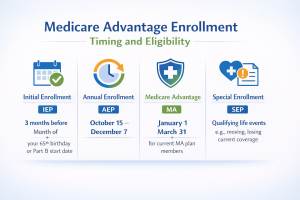
Understanding Enrollment Periods and Eligibility Criteria
Medicare Advantage, a popular choice for many seeking comprehensive health insurance, requires beneficiaries to be mindful of specific enrollment periods and eligibility criteria. For individuals turning 65, enrolling in Medicare Parts A and B is a prerequisite for joining a Medicare Advantage plan. The Initial Enrollment Period (IEP) is crucial, as it spans the seven months around your 65th birthday, three months before, the birthday month itself, and three months after. If you’re already enrolled in Medicare, the Annual Election Period (AEP), from October 15 to December 7 each year, allows you to switch or join a new plan.
Special Enrollment Periods (SEP) may also be available under qualifying circumstances, such as moving out of your current plan’s service area or losing other creditable health insurance coverage. Such flexibility ensures that moving between plans, dependent on personal needs or life changes, is accessible. A notable requirement includes residing within the plan’s service area to maintain eligibility, emphasizing the importance of reviewing plan networks and coverage specifics.
Benefits of choosing the right Medicare Advantage plan include managing deductibles and maximizing wellness programs that can contribute to more efficient healthcare costs. Independent Health offers tailored plans that can align perfectly with beneficiaries’ preferences, including PPO plans that provide freedom to seek care from a wider network of providers without the need for referrals.
Understanding these dimensions of enrollment will enable beneficiaries to fully utilize the deductibles and networks associated with their chosen Independent Health Medicare plan. Engaging with tools like the Medicare plans finder on MedicarePartCPlans.org aids in comparing options and making well-informed decisions that support your health journey optimally.
| Enrollment Period | Eligibility Criteria | Plan Benefits | Changing Plans | Tools & Resources |
|---|---|---|---|---|
| Initial Enrollment Period (IEP) | Aged 65 or older, or under 65 with a qualifying disability | Comprehensive coverage, including prescription drugs, vision, and dental | Option to switch plans within the Initial Enrollment Period | Medicare Plan Finder tool for comparison |
| Annual Enrollment Period (AEP): October 15 – December 7 | Already enrolled in Original Medicare or Medicare Advantage | Additional benefits, such as fitness programs or wellness services | Ability to switch from Original Medicare to a Medicare Advantage plan | Online webinars and consultation services for guidance |
| Medicare Advantage Open Enrollment Period: January 1 – March 31 | Currently enrolled in a Medicare Advantage plan | Access to coordinated care and network providers | Option to switch to another Medicare Advantage plan or revert to Original Medicare | Help desks and customer service for personalized advice |
| Special Enrollment Period (SEP) | Life events such as moving out of the plan area, losing current coverage | Flexibility in choosing a plan that suits changing needs | Change of plans permitted under specified conditions | Local offices and agencies for in-person assistance |
This table encapsulates how choice and flexibility in Medicare Advantage plans can be navigated through understanding enrollment periods and eligibility requirements.
When exploring Independent Health Medicare Advantage Plans for 2027, it’s important to gather detailed information to make an informed decision about your healthcare coverage.
Understanding the variety of plan types, benefits, and costs can help align your selection with your individual health and financial needs. As you navigate your Medicare options, consider utilizing our free Medicare plans finder tool to compare available plans in your area such as New York. This resource can assist in identifying the coverage that provides the most value for your needs. For a comprehensive understanding, continue to research and stay updated on any coverage changes.
Compare plans and enroll online
Frequently Asked Questions
What are Medicare Advantage Plans?
Medicare Advantage Plans, also called Medicare Part C, are an alternative way for individuals enrolled in traditional Medicare to receive their health coverage. These plans are managed by Medicare-approved private insurance providers and include benefits such as hospital (Part A) and medical (Part B) expenses, as well as additional benefits like prescription drug coverage, dental, and vision care.
What types of Medicare Advantage plan types are available in 2027?
In 2027, beneficiaries can choose from several Medicare Advantage plan types such as Health Maintenance Organizations (HMOs), Preferred Provider Organizations (PPOs), Private Fee-for-Service Plans (PFFS), and Special Needs Plans (SNPs). Each type offers unique features and network rules, catering to various healthcare needs and preferences.
What additional benefits do Medicare Advantage plans offer beyond traditional Medicare?
Medicare Advantage plans often provide additional benefits beyond the standard Parts A and B coverage. These benefits may include wellness programs, dental and vision care, and prescription drug coverage, offering a more comprehensive health insurance package for enrollees.
How do costs compare between traditional Medicare and Medicare Advantage plans?
Costs for Medicare Advantage plans, such as premiums, deductibles, and co-pays, can vary significantly from one plan to another. While some plans may offer a lower monthly premium compared to traditional Medicare, it’s important to review the cost structures for each plan, as they must conform to limits set by Medicare.
What should individuals consider when choosing a Medicare Advantage plan?
When selecting a Medicare Advantage plan, individuals should consider the plan’s benefits, costs, network of providers, and any additional services offered. Reviewing these aspects will help beneficiaries find a plan that aligns with their healthcare needs and financial circumstances. Using resources like the Medicare plans finder tool on MedicarePartCPlans.org can aid in comparing available options.
Have Questions?
Speak with a licensed insurance agent
1-877-436-2343
TTY users 711
Mon-Fri: 8am-9pm ET
Find & Compare Plans Online
ZRN Health & Financial Services, LLC, a Texas limited liability company