Navigating the costs associated with Medicare Advantage plans can be daunting, but understanding the key factors that influence your expenses can lead to better decision-making. Medicare Advantage, also known as Part C, offers an alternative route for receiving Medicare benefits through private insurance companies. This webpage explores the various components that can impact your costs, including premiums, deductibles, copayments, and out-of-pocket limits. By decoding these elements, you’ll be better equipped to evaluate plan options and align them with your financial expectations and healthcare needs. Discover how to manage and anticipate your Medicare Advantage expenses effectively.







Medicare Advantage Costs Explained
Key Highlights
- Medicare Advantage plans offer hospital and medical coverage with potential additional benefits like vision and dental.
- Medicare Advantage plan types include HMO, PPO, PFFS, and SNPs, each with unique network and provider requirements.
- Understanding premium structures, copayments, and coinsurance can significantly impact Medicare Advantage financial planning.
- Eligibility for Medicare Advantage requires enrollment in both Medicare Parts A and B, with specific enrollment periods.
- Resources like MedicarePartCPlans.org help compare plans by location, ensuring the best fit based on individual needs.
Compare plans and enroll online
Understanding Medicare Advantage: An Overview
Medicare Advantage, also known as Medicare Part C, offers an alternative to Original Medicare. These plans are provided by private insurance companies and are required to offer at least the same level of coverage as Original Medicare Parts A and B. By choosing a Medicare Advantage plan, beneficiaries may receive additional benefits, such as vision, dental, and wellness services. Understanding the various features and differences between Original Medicare and Medicare Advantage will help beneficiaries make informed decisions about healthcare coverage.

What is Medicare Advantage and How Does it Differ from Original Medicare?
Medicare Advantage plans consolidate hospital and medical coverage from Original Medicare (Parts A and B) into one plan, often with added services. Unlike Original Medicare, which operates on a fee-for-service basis where the federal government pays for your Medicare benefits, Medicare Advantage plans are offered by private companies approved by Medicare. These plans usually include Medicare Part D drug coverage and can provide additional services like dental, vision, and wellness programs, which Original Medicare doesn’t typically cover.
One key difference is how payments and services are managed. In Original Medicare, beneficiaries can see any doctor or hospital that accepts Medicare across the U.S., while Medicare Advantage plans often have network restrictions that limit you to certain doctors and hospitals. This managed care structure can affect your choice of providers but may offer lower out-of-pocket costs through zero-dollar premiums, depending on the plan. Understanding these aspects is crucial, as choosing between Original Medicare and a Medicare Advantage plan impacts how you receive healthcare services and handle associated costs. Educating yourself thoroughly using resources like the free Medicare plans finder tool on MedicarePartCPlans.org is a beneficial step in this decision.
Exploring the Types of Medicare Advantage Plans Available
Medicare Advantage comes in several plan types, each catering to different needs. The most common plans include Health Maintenance Organization (HMO), Preferred Provider Organization (PPO), Private Fee-for-Service (PFFS), and Special Needs Plans (SNPs).
HMO plans typically require you to use a network of doctors and hospitals and choose a primary care physician, who can provide referrals to specialists. These plans often have lower premiums but limit out-of-network coverage. PPO plans offer more flexibility by allowing you to see any healthcare provider, but using network providers will usually cost less. PFFS plans let you see any doctor who accepts the plan’s terms, though it’s crucial to confirm acceptance because not all doctors and hospitals accept these plans.
SNPs tailor to individuals with specific conditions or characteristics and offer targeted services and provider choices. They may provide specialized coverage for chronic illnesses or cater to beneficiaries in certain institutional settings. Knowing the differences among these Medicare Advantage plan types is essential for making an informed choice. Beneficiaries are encouraged to leverage resources like MedicarePartCPlans.org to compare plan types, policies, and coverage options tailored to their individual health needs and situations, ensuring the best possible care.
When exploring the different types of Medicare Advantage plans, consider these key features and factors:
- Understand network restrictions and provider flexibility for HMO and PPO plans.
- Evaluate if PFFS plans are widely accepted by your preferred doctors.
- Check if SNPs offer specialized services for specific health conditions.
- Compare premiums and out-of-pocket costs across plan types.
- Investigate additional benefits like vision, dental, or prescription coverage.
- Review plan ratings and customer service feedback for reliability insights.
- Consider future healthcare needs when selecting a plan.
This comprehensive outlook aids in identifying suitable Medicare Advantage plans for varied healthcare requirements.

Key Cost Considerations in Medicare Advantage Plans
Choosing the right Medicare Advantage plan is not just about the coverage options but also understanding the financial aspects that affect Medicare Advantage plan costs. From monthly premiums to unexpected copayments, having clarity on these elements helps beneficiaries manage their financial resources efficiently. We’ll explore the basics of how these plans are structured financially and delve into the impact of copayments and coinsurance on your overall expenses, providing valuable insights into the variables that influence your Medicare cost decisions.
Breaking Down the Basic Cost Structure of Advantage Plans
Medicare Advantage plans, while offering robust coverage options, bring a financial structure that differs from Original Medicare. One of the first elements to consider is the monthly premium. Some Advantage plans provide a zero-dollar premium option, meaning there’s no extra plan premium beyond Part B premiums. However, it’s crucial to understand that the offer of zero-dollar premiums often means a trade-off in other financial aspects, such as higher copayments or a different payment amount structure when accessing services. Beneficiaries should assess their monthly income and overall financial health to decide which plan premium aligns best with their situation.
A notable cost factor in these plans involves the Medicare-approved amount for services. Medicare Advantage plans often arrange services at a pre-negotiated rate with healthcare providers. While Original Medicare’s fee-for-service offers healthcare access across providers accepting Medicare, Advantage plans may have network limitations, potentially impacting your out-of-pocket payments. The benefit of a coordinated service approach is that, often, the financial exposure in certain zero-dollar premium Advantage plans can remain controlled within network limits, providing a level of predictable cost management.
When researching Medicare Advantage, it’s essential to consider how these cost structures, like the Medicare cost during your benefit period, influence your care options. Assessing aspects from potential penalty charges for postponed enrollment to the coverage intricacies can shield you from unexpected financial impacts. Using resources such as the free Medicare plans finder tool available on MedicarePartCPlans.org enhances your understanding of plan premiums against services covered, guiding you towards a well-informed choice that corresponds with your income and insurance requirements.
Find & Compare Plans Online
Impact of Copayments and Coinsurance on Your Overall Expenses
When exploring Medicare Advantage, one cannot overlook how copayments and coinsurance affect financial planning. Unlike traditional Medicare, where coinsurance costs are predictable across the breadth of care, Medicare Advantage plans introduce a different static framework that might fluctuate based on provider networks and services. Copayments are fixed amounts you pay for services like doctor visits or prescription drugs within your plan’s coverage network, and they directly influence your healthcare expenditure throughout the benefit period.
Understanding the cost implications of copayments and coinsurance is vital when comparing Advantage plans. While copayments might appear marginal for each service, they accumulate over time, particularly if you have regular medical appointments or require ongoing treatments. Some Medicare Advantage plans might offer lower copayments for standardized services like routine physicals, yet it’s equally important to observe that costs can augment significantly for specialized care or out-of-network services, leading to elevated payment amounts in your overall expenses.
Coinsurance, the percentage of costs you share after meeting your deductible, can also add to your financial burden if not planned properly. Advantage plans typically offer diverse structures where coinsurance payments may vary, based on whether care is received in-network or out-of-network. This variance implies that understanding your coverage fully, including the impact of receiving care outside your preferred network, is crucial to managing potential financial risks. Recognizing these cost components and using tools from MedicarePartCPlans.org can simplify the comparison of these nuances in different policies, ultimately aiming to reduce unexpected financial impacts during your healthcare pursuits.
Medicare Advantage Enrollment and Eligibility
Medicare Advantage plans offer an appealing alternative to Original Medicare for many beneficiaries, providing comprehensive healthcare coverage under one plan option. Eligibility and enrollment in these plans hinge on several factors that participants must understand. By examining the criteria for who qualifies and the ideal times for enrollment, Medicare beneficiaries can better navigate the selection process and optimize their coverage to suit their individual needs. Understanding these details ensures informed decision-making when evaluating coverage options and financial implications.
| Eligibility Criteria | Enrollment Periods | Factors to Consider | Automatic vs. Manual Enrollment | Special Enrollment Conditions |
|---|---|---|---|---|
| Age 65 or older, or under 65 with a qualifying disability | Initial Enrollment Period (IEP) | Plan benefits and costs | Automatic for those receiving Social Security benefits | Special Enrollment Period for life events |
| U.S. citizen or legal resident | Open Enrollment Period (OEP) | Network availability | Manual enrollment is required otherwise | Change in residence |
| Already enrolled in Medicare Part A and B | Annual Election Period (AEP) | Provider coverage | Enroll through a plan provider or Medicare.gov | Loss of other coverage |
This table highlights key elements of Medicare Advantage enrollment, helping beneficiaries navigate their options effectively.
Who Qualifies for Medicare Advantage and When to Enroll
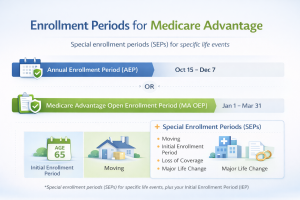
To qualify for Medicare Advantage plans, you must first meet standard Medicare eligibility criteria, which include being 65 or older or qualifying through disability if under 65. Crucially, you must also be enrolled in both Medicare Parts A and B before considering an Advantage plan. There’s a specific enrollment period to be aware of, known as the Initial Enrollment Period (IEP). This typically spans seven months around your 65th birthday, offering you the opportunity to make pivotal decisions about your healthcare coverage without financial penalty concerns.
For those already receiving Social Security retirement benefits, the enrollment process often becomes automatic, allowing you to transition seamlessly into Medicare and then consider Medicare Advantage plans. For others, manually enrolling during the IEP ensures you avoid late penalties that could impact financial planning. Additionally, the Annual Enrollment Period occurs each fall from October 15 to December 7, allowing existing beneficiaries to re-evaluate or change their Advantage plans as needed without penalty.
Understanding these timelines is crucial to prevent financial pitfalls, as missing the designated periods can lead to a delay in coverage and possible penalty charges. Moreover, Special Enrollment Periods (SEP) may apply during life changes like moving or losing other healthcare coverage, allowing for additional flexibility to change plans as circumstances evolve. When choosing a Medicare Advantage plan, factors such as plan premiums, copayments, and income should be carefully considered to align with financial and health needs. Utilizing resources like MedicarePartCPlans.org’s free Medicare plans finder tool can help beneficiaries compare plans by location and coverage requirements, ensuring a choice that optimally matches their medical and financial situations.
Finding the Right Medicare Advantage Plan for Your Needs
Choosing the right Medicare Advantage plan extends beyond simple healthcare coverage; it’s about aligning the plan with your medical and financial needs. From understanding specific healthcare services to navigating cost structures and coverage policies, selecting a plan involves comprehensive research and comparison. The availability of resources to compare plans by location can guide you in this process, ensuring access to preferred hospitals and healthcare providers. With a focus on utilizing these resources, beneficiaries can make informed decisions about their Medicare Advantage options.
Utilizing Available Resources to Compare Plans by Location
When searching for the right Medicare Advantage plan, using available resources to compare options by location is essential. These resources enable you to understand how certain factors like network restrictions, coverage needs, and cost structures vary based on where you live. Your location influences not just the availability of specific plans but also the network of doctors and hospitals you can access. For example, a plan that allows wide access to top hospitals and healthcare services within your area may not offer the same flexibility if you move or travel frequently. Therefore, considering location-specific needs helps in foreseeing any financial or service-related roadblocks you might encounter.
The first step in this process is to use online resources that specialize in Medicare Advantage plans, such as MedicarePartCPlans.org, which offers a free Medicare plan finder tool. This tool allows beneficiaries to enter their zip code and compare available plans tailored to their geographic area. It can provide an overview of zero-dollar premium options, different payment amount structures, and eligible services covered under these policies. Additionally, reviewing public and private insurance company websites can shed light on numerous Advantage plans that suit varied income and financial capabilities. By comparing plan benefits like prescription drug coverage, copayments, and overall plan cost, beneficiaries can evaluate which options fit their healthcare needs and financial situation effectively.
Furthermore, local resources, such as one-on-one insurance consultations or informational sessions by local Medicare insurance educators, can offer personalized support. Engaging in these resources allows you to ask specific questions related to your healthcare priorities, including how Medigap policies might enhance your coverage and ease financial obligations. Evaluating these plans in tandem with factors like available hospital network, policy details, and potential out-of-pocket costs offers a comprehensive look at what each plan entails relative to your current and future health needs. Ultimately, the act of comparing plans by location empowers beneficiaries to make well-informed decisions that align with both their medical requirements and financial resources.
Understanding the costs associated with Medicare Advantage plans empowers beneficiaries to make informed decisions about their healthcare. Factors such as monthly premiums, copayments, coinsurance, and out-of-pocket limits can vary significantly between plans and locations. By analyzing each component of the costs, including how they compare to Original Medicare, beneficiaries can better evaluate which plans align with their health needs and financial circumstances. Utilizing our Medicare plans finder tool can further assist in comparing available plans, ensuring you have the information you need to select a plan that meets your unique requirements.
Compare plans and enroll online
Finding the Right Medicare Advantage Plan for Your Needs
What are Medicare Advantage Plans?
Medicare Advantage, also known as Medicare Part C, is an alternative to Original Medicare. These plans are offered by private insurance companies and combine hospital and medical coverage from Original Medicare into one plan. They often include additional benefits such as vision, dental, and wellness services.
How are Medicare Advantage plans different from Original Medicare?
Unlike Original Medicare, which allows beneficiaries to see any provider accepting Medicare, Medicare Advantage plans often have network restrictions. These plans are managed by private companies and may offer lower out-of-pocket costs. They also usually include additional services not covered by Original Medicare, like dental and vision.
What types of plans are available under Medicare Advantage?
Medicare Advantage offers several plan types: Health Maintenance Organization (HMO), Preferred Provider Organization (PPO), Private Fee-for-Service (PFFS), and Special Needs Plans (SNPs). Each type has unique features such as network requirements and coverage options tailored for different needs.
What factors influence the cost of Medicare Advantage plans?
The cost of Medicare Advantage plans is influenced by factors such as monthly premiums, copayments, coinsurance, and out-of-pocket limits. Payment structures may vary based on whether services are in-network or out-of-network, and some plans offer low premiums with different payment setups for accessing care.
How can beneficiaries choose the right Medicare Advantage plan?
To choose the appropriate Medicare Advantage plan, beneficiaries should consider plan types, coverage needs, cost structures, and provider networks. Resources like MedicarePartCPlans.org can be utilized to compare plans by location and coverage options to ensure an informed decision is made.
Have Questions?
Speak with a licensed insurance agent
1-877-436-2343
TTY users 711
Mon-Fri: 8am-9pm ET
Find & Compare Plans Online
ZRN Health & Financial Services, LLC, a Texas limited liability company