Medicare Part C Eligibility

Welcome to MedicarePartCPlans.org, your trusted resource for understanding Medicare Advantage (Part C) eligibility and enrollment. Medicare Part C 2027 offers a vital option for those looking to combine the benefits of Parts A and B, with additional coverage options that suit your health needs.

Navigating these options can seem daunting, but with our clear guidance, you can confidently explore your eligibility and learn how to enroll. Our educational tools simplify this process, ensuring you have the information you need to make informed decisions tailored to your healthcare needs.

Key Highlights

  • Medicare Part C covers Parts A and B and offers additional benefits for eligible beneficiaries.
  • Eligibility requires enrollment in Original Medicare, residency in plan’s service area, and age or disability criteria.
  • Medicare Advantage plans offer options like PPO or HMO, with added benefits such as dental and vision.
  • Enrollment periods like IEP and OEP are crucial for switching or enrolling in Medicare Advantage plans.
  • The free plans finder tool helps compare Medicare Advantage plans based on location and individual needs.

Compare plans and enroll online

Understanding Medicare Part C Eligibility

Grasping the nuances of Medicare Part C, also known as Medicare Advantage plans, begins with understanding eligibility requirements. These plans offer an alternative to Original Medicare while providing comprehensive healthcare benefits. Eligibility is centered on certain criteria, including age, residency, and enrollment in Original Medicare (Parts A and B).

Exploring who qualifies, along with specific age and residency requirements, gives a clearer path for those looking to enroll in Medicare Part C. Navigating these qualifications can prepare older adults, caregivers, and those assisting eligible individuals, ensuring informed decisions when considering Medicare Advantage plans.

Medicare Part C Eligibility

Who Qualifies for Medicare Part C?

To embrace the benefits of Medicare Part C, it’s essential to first determine eligibility. Anyone eligible for Medicare Part C must be enrolled in Original Medicare (Parts A and B). This foundational enrollment ensures that you can transition smoothly to a Medicare Advantage plan. Medicare Part C eligibility is designed to provide comprehensive healthcare options to older adults and those with certain disabilities.

Individuals who qualify include those 65 and older, beneficiaries receiving Social Security Disability Insurance for 24 months, or those diagnosed with certain conditions such as End-Stage Renal Disease or Amyotrophic Lateral Sclerosis. Understanding Medicare involves recognizing the importance of the initial enrollment period, which begins three months before you turn 65 and lasts until three months after reaching that age.

During this time, you are eligible to explore Medicare Advantage plans, which may offer additional benefits compared to Original Medicare. Moreover, those eligible for Medicare due to a disability can enroll in Medicare Part C upon receiving their entitlement to Parts A and B, subject to the plan’s service area. It’s important to note that the plan’s service area plays a crucial role, as not all plans are available in every location.

Access to these healthcare benefits is tailored to meet the needs of people based on varying geographical service areas. Therefore, before attempting to enroll, verify which plans are available in your area to ensure you are eligible. This verification process helps align your healthcare needs with the right Medicare Advantage plan, providing a smoother transition from Original Medicare.

Age and Residency Requirements for Enrollment

Age and residency stipulations are crucial to enrolling in Medicare Part C, making understanding these criteria important for eligibility. As part of enrollment, you must be enrolled in Original Medicare (Parts A and B), and you typically must also be 65 or older. Even for those who’ve gained eligibility earlier due to disability, confirming residency within a plan’s service area remains essential.

Living within these designated boundaries is a prerequisite since Medicare Advantage plans necessitate residency within the plan’s service area, where healthcare services are provided. This requirement helps ensure that the necessary healthcare facilities and services are accessible to those enrolling. Beyond residency, enrollment periods such as the Initial Enrollment Period and Open Enrollment Period are pivotal for those considering Medicare Advantage.

The Initial Enrollment Period spans seven months around an individual’s 65th birthday, offering a strategic window to assess and choose Medicare Advantage options. In contrast, the Open Enrollment Period provides existing Medicare Advantage enrollees the chance to review and, if needed, change their plan once annually. Adjusting your healthcare plan during this time can ensure your benefits align with evolving health needs and life circumstances.

Additionally, Special Enrollment Periods may be available under specific conditions, such as moving out of a plan’s service area, which allows you to switch plans mid-year. Medicare Part C’s community-oriented approach, which bases plan choices on residency, aligns healthcare coverage closely with beneficiaries’ local needs. This structure supports not only practical accessibility but also personalized healthcare solutions.

As you navigate these requirements, considering available resources and utilizing online tools can simplify the process, ensuring a clear understanding of how best to align your Medicare Advantage plan with your healthcare needs and residency considerations.

Medicare Advantage: Plan Types and Benefits

Understanding Medicare Advantage plans involves recognizing their diversity and extensive benefits compared to Original Medicare. Each plan offers different types of coverage that cater to various needs, offering enhanced healthcare services and the flexibility to choose the plan’s service area. When comparing Medicare Advantage to Original Medicare, it is essential to weigh service options and benefits offered.

Additionally, Medicare Advantage plans come with specific coverage options varying by location, which affects plan availability and enrollment periods. These factors help ensure beneficiaries can select a plan that best aligns with their personal healthcare requirements and geographical constraints.

Find & Compare Plans Online

Speak with a licensed insurance agent

1-877-436-2343TTY 711

Mon-Fri: 8am-9pm ET

Comparing Medicare Advantage to Original Medicare

Medicare Advantage plans, also referred to as Medicare Part C, provide an attractive alternative to Original Medicare by bundling comprehensive healthcare benefits together. While Original Medicare provides coverage through Part A and Part B, offering hospital and medical insurance, Medicare Advantage expands this coverage with additional benefits such as vision, dental, hearing, and even wellness programs.

These advantage plans often include prescription drug coverage, an add-on to Original Medicare, known as Part D. One significant difference is how payments are structured.

Original Medicare often involves separate premiums for Part B, and possibly for Part D and Medigap plans, whereas Medicare Advantage generally consolidates these costs into a single plan premium, potentially making budgeting easier for older beneficiaries.

Medicare Advantage plans also offer preferred provider organization (PPO) and health maintenance organization (HMO) options, allowing enrollees to choose their preferred healthcare structure. HMOs usually require you to get healthcare services from a network of providers within your plan’s service area, while PPOs offer more flexibility to see providers outside of this network, albeit at a higher cost.

This choice makes Medicare Advantage appealing as it can be tailored to individual preferences, whether a person prioritizes lower out-of-pocket costs or a broader choice of healthcare providers.

Enrollment in Medicare Advantage requires being enrolled in both Parts A and B of Medicare. Once enrolled, the plan often includes all the benefits of Original Medicare while allowing the enrollee to integrate additional services that are not typically covered. This integration is beneficial for those needing a wider range of healthcare services or having specialized medical needs.

However, understanding the plan’s service area is vital since it can dictate which providers you can see and what additional services you may access. Therefore, when considering Medicare Advantage plans over Original Medicare, weighing the scope of services, provider network restrictions, and costs is crucial for making an informed decision.

To extend the discussion on Medicare Advantage versus Original Medicare, consider these key considerations when evaluating which plan might suit you best:

  • Analyze the range of additional benefits provided, such as vision, dental, and hearing, beyond basic coverage.
  • Consider the convenience of bundled payments compared to separate premiums under Original Medicare.
  • Evaluate the flexibility and restrictions of PPO and HMO options within Medicare Advantage plans.
  • Compare prescription drug coverage under Medicare Advantage with the Part D add-on in Original Medicare.
  • Examine provider network accessibility and potential out-of-network costs in each plan type.
  • Investigate the coverage for wellness programs and preventative care services offered.
  • Review the structure of co-pays and deductibles associated with Medicare Advantage plans.
  • Understand geographic limitations and service areas impacting healthcare provider options.

These points help clarify important factors when assessing Medicare Advantage as a potential alternative.


Available Coverage Options by Location

The availability of Medicare Advantage plans is heavily influenced by location due to plan service areas dictating access to specific benefits. Each Medicare Advantage plan is designed to serve a particular geographic area, ensuring that healthcare resources are adequately made available to the beneficiaries within these boundaries. Thus, eligibility for certain Medicare Advantage plans can vary significantly depending on where you live.

Urban areas may offer a wider range of plan options due to the larger pool of beneficiaries and providers, whereas rural regions might have more limited selections that still aim to cover essential healthcare services.

Choosing a Medicare Advantage plan requires careful consideration of the plan types and benefits provided in your area. Locations with comprehensive network arrangements offer numerous benefits such as expanded care coordination and a variety of specialists within easy reach, enhancing the plan’s value to enrollees.

Furthermore, understanding the insurers operating within your locality allows you to make more informed decisions regarding additional benefits that align with your health needs.

Many plans include extra services such as transportation for medical appointments and access to fitness programs, which are not covered under Original Medicare. These benefits can be essential for maintaining a healthy lifestyle and managing chronic conditions more effectively.

Enrollment periods for Medicare Advantage also depend on your location. During the Initial Enrollment Period or the Annual Open Enrollment Period, checking the available plans and their service areas ensures that the most suitable options are accessible to you. In some cases, Special Enrollment Periods may apply, especially when your residence changes, ensuring continuity of care without interruption in benefits.

To effectively navigate these enrollment options and coverage variances by location, utilizing comprehensive resources like the plan finder tool on MedicarePartCPlans.org can facilitate this process by offering a clearer overview of available plans and personalized support to match your unique coverage needs. By doing so, you align your healthcare coverage optimally with both your geographical and medical needs, providing peace of mind and effective health management.

Steps for Enrolling in Medicare Advantage (Part C)

Enrolling in Medicare Advantage (Part C) requires navigating specific enrollment periods and understanding various options available for those eligible. Whether you’re preparing to enroll for the first time or reviewing your coverage, knowing the rules of the initial and general enrollment periods is crucial.

Additionally, using tools like the free Medicare plans finder on MedicarePartCPlans.org can simplify the process, allowing you to compare and choose plans based on your healthcare needs and location. These steps help ensure you make well-informed decisions when transitioning from Original Medicare to Medicare Advantage plans.

Initial Enrollment and General Enrollment Periods

Initial Enrollment and General Enrollment Periods

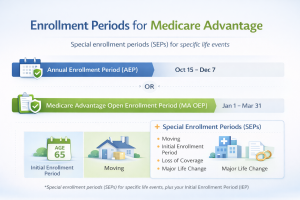
The journey to a Medicare Advantage plan starts with understanding the initial enrollment period and other pivotal windows that allow for enrollment. For those new to Medicare, the Initial Enrollment Period (IEP) is often the best time to enroll in Medicare Advantage. This seven-month window includes the three months before turning 65, your birth month, and the three months following that milestone.

During this time, you have the opportunity to explore various Medicare Advantage plans that offer expanded benefits not typically covered by Original Medicare. These benefits may include vision, dental, hearing, and even prescription drug coverage, making Medicare Advantage an attractive option for comprehensive healthcare needs.

You must be enrolled in Original Medicare Parts A and B first to switch to Medicare Advantage. If you miss the IEP, the General Enrollment Period (GEP) from January 1 to March 31 each year offers another chance.

During the GEP, you can sign up for Parts A and B, setting the stage for Medicare Advantage enrollment. Coverage generally starts on July 1 for those who enroll in this period. However, it’s important to note that late penalties might apply if you don’t enroll during your IEP or don’t meet other conditions for Special Enrollment Periods. Older adults and those with disabilities need to understand not just the timing, but also how plan access is influenced by geography, as Medicare Advantage plans are location-specific.

This means living within the plan’s service area is mandatory, affecting which plans you can choose. Additionally, the Open Enrollment period from October 15 to December 7 allows existing Medicare Advantage beneficiaries to switch plans. Planning around these enrollment periods ensures coverage that aligns well with evolving healthcare needs while minimizing gaps and unexpected costs.


Enrollment Period Description Actions Required Potential Benefits
Initial Coverage Election Period (ICEP) When you first become eligible for Medicare, typically at 65. Review plans and enroll in a Medicare Advantage plan if desired. Access to a broader range of healthcare services and potential additional benefits.
Annual Election Period (AEP) Occurs from October 15 to December 7 every year. Compare and switch plans or adjust coverage as needed. Opportunity to optimize plan benefits and costs annually.
Medicare Advantage Open Enrollment Period (OEP) Runs from January 1 to March 31 yearly. Switch to another Medicare Advantage plan or go back to Original Medicare. Flexibility to change plans if current coverage is unsatisfactory.
Special Enrollment Period (SEP) Triggered by specific events such as moving or losing employer coverage. Submit proof of a qualifying event and choose a suitable plan. Adjust coverage when life circumstances change, ensuring continuous adequate healthcare.

This table serves as a concise guide to understanding the enrollment periods and resources available for Medicare Advantage, aiding in well-informed decision-making during transitions.

How to Easily Enroll Using Our Free Plans Finder Tool

To streamline the process of enrolling in Medicare Advantage plans, utilizing the resources available on MedicarePartCPlans.org can be incredibly beneficial. Our free plans finder tool is designed to assist Medicare beneficiaries in locating plans that align with their individual healthcare needs. It helps you compare available options by location, ensuring you consider the best fit for your specific circumstances.

Start by entering basic details like your zip code and current Medicare status to compare Medicare Part C plans in your are, like Vermont. This information is vital to access plans tailored to your geographical area, reflecting your eligibility criteria based on residency within the plan’s service area.

Another key feature of the tool is its ability to filter plans by specific benefits. For example, if you’re comparing plans that include additional benefits such as dental or vision, the tool makes it easy to see what’s available in your area.

Many people find this feature helpful because it addresses unique aspects of their healthcare needs, which Original Medicare might not cover. Moreover, by offering insights into cost comparisons and plan ratings, you can gain a comprehensive view of how each Medicare Advantage plan stands up against others in your area.

Beyond the tool, resources, and guides on MedicarePartCPlans.org provide educational support to help you understand not only enrollment processes but also Medicare Advantage benefits. Leveraging such resources ensures informed decision-making, especially during time-sensitive enrollment windows such as the Initial and General Enrollment Periods.

This proactive approach empowers you to align your healthcare coverage with your lifestyle and health requirements efficiently. Whether you’re new to Medicare or reassessing your current plan options, these tools can facilitate a seamless enrollment experience, enhancing your confidence in managing healthcare decisions effectively.

Understanding Medicare Part C eligibility and the enrollment process is crucial for making informed decisions about your healthcare coverage. By exploring various plans through the tools available on our website, you can identify options that align with your healthcare needs and financial situation.

Whether you are new to Medicare or evaluating your current coverage, it is important to consider how different plans may vary based on your location and personal health requirements. Utilize our free resources to help guide your selection and make the most of the Medicare Advantage opportunities available to you.

Compare plans and enroll online

Frequently Asked Questions

What is Medicare Advantage (Part C)?

Medicare Advantage, also known as Part C, is a plan offered by private companies that combines Medicare Parts A and B benefits. These plans often include additional services such as vision, dental, and prescription drug coverage.

How do I become eligible for Medicare Part C?

To be eligible for Medicare Part C, you must be enrolled in both Medicare Parts A and B, reside in the plan’s service area, and meet age or disability requirements. Eligibility includes individuals 65 or older or those receiving Social Security Disability benefits for 24 months.

What are the enrollment periods for Medicare Advantage?

Key enrollment periods include the Initial Enrollment Period (IEP), which spans seven months around your 65th birthday, and the Annual Open Enrollment Period (OEP) from October 15 to December 7. Special Enrollment Periods may apply under certain conditions such as moving out of a plan’s service area.

What types of plans are available under Medicare Advantage?

Medicare Advantage plans typically include PPO (Preferred Provider Organization) and HMO (Health Maintenance Organization) plans. PPOs offer more flexibility in choosing healthcare providers, while HMOs usually require services from within a specified network.

How do location and residency affect Medicare Part C plans?

Medicare Advantage plans are geographically dependent. You must reside within a plan’s service area to be eligible. This geographical limitation means plan availability can vary greatly from one region to another, affecting which plans are available to you.

Have Questions?

Speak with a licensed insurance agent

1-877-436-2343

TTY users 711

Mon-Fri: 8am-9pm ET

Find & Compare Plans Online

Speak with a licensed insurance agent

1-877-436-2343TTY 711

Mon-Fri: 8am-9pm ET

ZRN Health & Financial Services, LLC, a Texas limited liability company