Coverage Options and Benefits
Original Medicare largely offers a standard set of benefits under Part A and Part B, focusing on essential hospital and medical services.
These governmental health plans cover services like inpatient hospital stays, home health care, and outpatient services, though they may lack coverage for prescription drugs, dental, and vision care.
Beneficiaries often need to purchase separate plans, such as a Medigap policy or Part D for prescription drugs, to cover these gaps and manage out-of-pocket costs effectively.
While this separation provides some flexibility in plan choices, it might not be the most convenient for those looking to streamline their healthcare coverage.
Medicare Advantage, on the other hand, offers a more inclusive approach, bundling Parts A and B typically with Part D drug coverage and extra services like dental, vision, and wellness programs.
These plans are managed by private companies and offer diverse choices through options like Health Maintenance Organizations (HMO) and Preferred Provider Organizations (PPO), allowing beneficiaries to select a plan that aligns with their preferred network and care philosophy.
Advantage enrollees can enjoy benefits such as coordinated care and defined out-of-pocket maximums, providing peace of mind and financial predictability.
This consolidation can be particularly appealing to those who prefer having all services under a single umbrella for easier management and potentially reduced paperwork.
The choice between these health plans should involve a careful evaluation of personal health needs, provider preferences, and budget considerations.
Beneficiaries are encouraged to compare available plans during the Medicare Open Enrollment Period using tools like the MedicarePartCPlans.org website, which aids in selecting plans that best fit individual needs based on local availability and specific benefits.
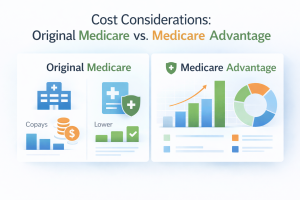
Cost Considerations: Original Medicare vs. Medicare Advantage
Cost is a significant factor when deciding between Original Medicare and Medicare Advantage.
Original Medicare operates under a fee-for-service model, generally resulting in a 20% coinsurance after deductibles are met, which can lead to high out-of-pocket expenses without supplemental insurance like Medigap.
These extra costs can include deductibles, copayments, and any services not covered under Parts A and B.
Additionally, Original Medicare typically requires separate enrollment in a Part D plan for prescription drug coverage, which can add to monthly premiums.
Medicare Advantage plans restructure these financial aspects, offering fixed costs and monthly premiums that can provide better budgeting predictability.
Many Advantage plans set a limit on out-of-pocket costs for covered services, providing a safety net against unexpected medical expenses.
Although beneficiaries may still be responsible for certain copayments and coinsurance, the annual cap on personal spending can be reassuring.
These plans also may include Part D drug coverage within the same health plan, potentially lowering total costs and providing more streamlined expenses.
It’s important to explore the financial implications of both types of plans thoroughly.
Comparing costs during open enrollment is vital, and considering how often you require medical services or medications can help determine which plan offers the most cost-effective coverage.
Utilizing the MedicarePartCPlans.org tool to compare regional advantage plans can ensure you choose a plan that balances costs with needed medical services and care, maximizing your Medicare benefits while aligning with your financial strategy.
To help you weigh these considerations more effectively, here’s a summary of key financial aspects to keep in mind:
- Original Medicare includes separate Part D plans that may increase monthly expenses.
- Advantage plans often bundle services for more predictable financial planning.
- Consider potential out-of-pocket expenses without supplemental insurance like Medigap.
- Evaluate if a plan includes a cap on annual personal spending.
- Analyze differences in deductibles, copayments, and coinsurance between the two.
- Check for potential savings in the streamlined Advantage plan drug coverage.
- Use resources like the MedicarePartCPlans.org tool for detailed plan comparisons.
Evaluating these aspects can help you select a Medicare plan that aligns with your healthcare needs and financial goals.

Enrollment and Advantage Open Periods
Medicare enrollment periods are crucial for beneficiaries to make important decisions regarding their coverage. During these times, one can switch from Original Medicare to a Medicare Advantage plan, change between different Advantage plans, or add a prescription drug plan.
Understanding these periods, such as the Medicare Open Enrollment Period and the Advantage Open Enrollment Period, is essential for making timely and informed coverage choices.
Each period presents unique opportunities to adjust coverage according to health needs and financial considerations, ensuring that beneficiaries maximize their medicare benefits while minimizing pocket costs.